


Many businesses have transformed their HR services through strong leadership, technical innovation, and support from outside partners. ScottMadden has partnered with countless organizations, providing solutions and tools to help rebuild their service models and inspire growth across the entire business.
HR Remodeling, A Holistic Approach
Many companies transformed their service delivery models years ago and seek to improve and optimize services. Perhaps business needs have changed, or executives have recognized the success of HR services and now expect new or expanded capabilities. In other cases, the complexity of services has increased, and the organization needs to respond appropriately.
To repair or remodel your organization’s HR services, it’s essential to understand the real problems and how a modernized HR model can be structured. Whether your HR service delivery requires slight improvements or some severe repair, there are five ways ScottMadden recommends approaching the HR remodeling process:
1. Establish Strong HR Governance
To establish and maintain the success of your HR services model, consider a governance board. The formality of the board and the level of participation are influenced by the size of the organization, the number and complexity of services, organizational culture, and hierarchy. Key benefits of a governance board:
- Provides direction to the operational team and an escalation point for issue resolution
- Represents HR services among senior management
- Allows customers to strongly influence direction of shared services and ensures responsiveness to business needs
- Creates a formal process to control spending and prioritize initiatives
- Ensures integration with other business initiatives
2. Align HR Services with Staff Competencies
Field HR staff must have the right competencies to provide strategic support. Skills once considered “best practices” have given way to new and different attributes:
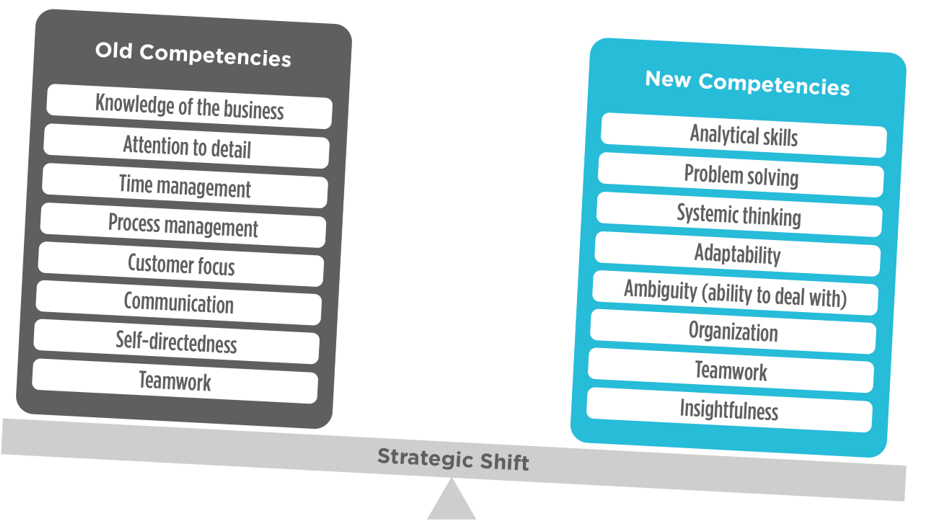
Strong talents with the right skills are often in place. It’s just a matter of the HR governance model to help expand their capabilities or seek opportunities within the company.
With their unique skills and interests, each employee’s career path doesn’t have to be linear within the service center and end at a Tier 2 supervisor position. Be sure to listen to staff members who want increased personal development or more interactions with their supervisors—and take those requests seriously.
Besides development opportunities, many organizations have an untapped resource—Millennial staff. Their comfort with cloud-based platforms and other applications can help bridge technology gaps within a multi-generational service center staff.
Thinking about your employee’s skill sets and overall development can help you align competencies and motivate strong performers to stay long-term.
3. Simplify and Harmonize Policies
Policy harmonization can maximize the efficiency gains of the HR support model, as well as drive process consistency and optimization while increasing overall organizational success. Through engagement and increased transparency, harmonized policies can reinforce a positive employee experience and overall value proposition, not to mention improving operational effectiveness and reducing errors.
Since each business is unique, policy exceptions must also be outlined. A policy review committee can decide the exceptions and deviations, under what circumstances they will be allowed, and the guidelines and boundaries around the exceptions.
These guidelines should include who is eligible for an exception, circumstances in which exceptions are granted, and the types of exceptions allowed. Determinations should also include who approves an exception and how it will be communicated and documented.
4. Standardize and Integrate Technology Platforms
Technology platforms, like employee portals and self-service channels, are critical to driving efficiency and increased user experience. Top-performing companies average twice the number of portal hits per employee versus comparison companies.
Artificial intelligence and robotics process automation can provide dramatic gains in efficiency, accuracy and scalability, and for employees, more responsive, “human” experiences.
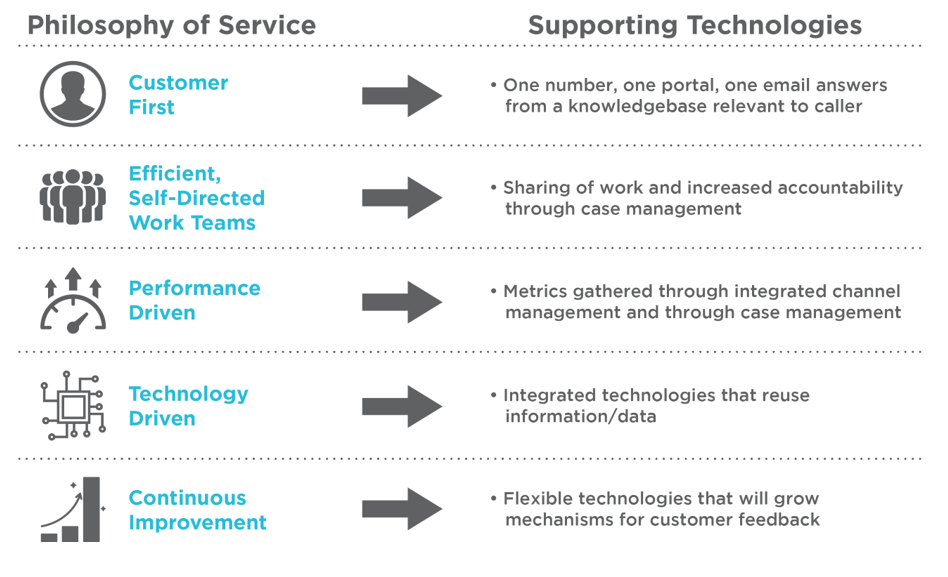
Overall, technology can support HR service management in multiple ways, providing a powerful connection between organizational philosophy and tactical HR delivery in real-time:
5. Determine the Right Metrics
Data, information, and knowledge are all critical elements contributing to an effective HR service delivery model. Various leading practices provide opportunities to optimize your operations:
- Service Level Agreements (SLAs) are useful frameworks for terms of service delivery. An SLA is a dialogue with a customer that establishes and maintains the target quantity, quality, and cost of services to be provided in the future.
- SLAs are concise and negotiated (not dictated), serving as a vehicle for understanding and managing demand. SLAs are also a basis for regular discussions with customers. They should be updated as necessary, typically annually.
- Another opportunity to take your HR services to the next level is to implement analytics. Analytics derived from HR data are not simply metrics but rather data used to drive insights and actions, ultimately changing how a company behaves and responds to the data received. In other words, metrics offer a historical look back, while analytics inform future decisions.
By analyzing the usage, patterns, and trends with the incoming service center data, organizations can determine where and how to realize additional cost savings. Furthermore, shared services can harness enterprise data at its fingertips to provide insights that benefit the broader enterprise.
Getting Help and Starting the HR Remodeling Process
By reviewing your operations, you can thoroughly and effectively define, repair, and refine your practices. Your HR services will bring greater efficiency, customer satisfaction, and cost savings to the business. If your organization is ready to transform your HR services model, ScottMadden can help.
With more than 25 years of shared services experience, our consultants can help you identify an optimal approach to innovate and advance your existing HR services and implement successful changes while avoiding potential pitfalls along the way.