




A Use Case for People Analytics in Healthcare
Healthcare systems face many challenges related to their registered nurse (RN) population, including growing demand, increasing turnover rates, and high replacement costs. The average hospital loses nearly $5 million per year on RN turnover. [1] However, that figure does not include additional costs related to impacts on patient satisfaction (e.g., brand image, decreased patient volumes) that may also result from an instability in the patient-facing RN population. Typical initiatives to combat the challenge are often high-level, such as increasing retention or shortening time-to-fill, and tackled in a narrow or siloed fashion with limited insight that employee retention analytics and employee turnover data analysis offer to investigate core issues.
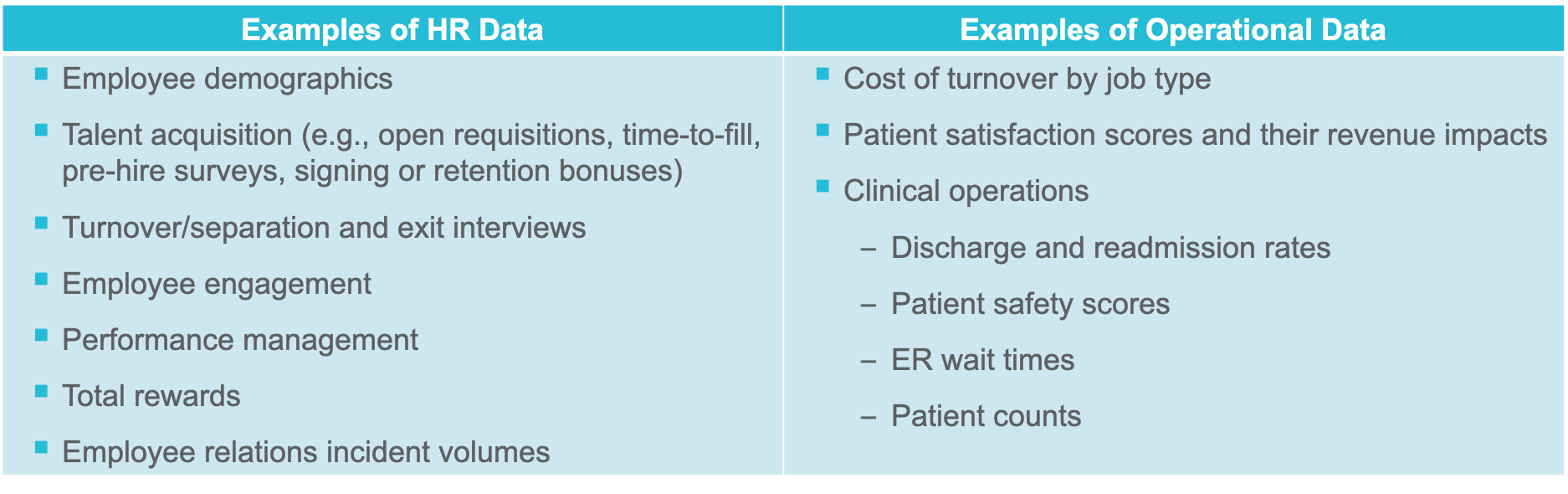
As mentioned in our article, “Ethically Deploying People Analytics,” HR holds the “keys to the kingdom” when it comes to employee data and people analytics, making HR uniquely positioned to partner with other organizational stakeholders and lead them to a deeper understanding of the people-related issues. In addition, it allows HR to facilitate the development of focused talent strategies that impact the bottom line. Figure 1 highlights types of data that can be gathered and analyzed for a holistic view of healthcare industry issues.
With this type of employee turnover data analysis, healthcare systems can answer key questions, such as:
- How much does RN turnover cost our organization?
- Which segments of RNs are turning over?
- What are the key drivers of RN turnover?
- What are the key characteristics of tenured RNs? What makes them successful?
- Does RN turnover impact patient satisfaction, readmission rates, and/or other clinical operations metrics?
ScottMadden recently helped in the statistical modeling of RN turnover at a 14,000-employee healthcare system. The company wanted to dive into the drivers and impacts of RN turnover across their nine hospitals and affiliated practices. While RN turnover was a known challenge, the organization had not explored cross-functional data analysis, retention analytics, or statistical modeling to help drive RN hiring and engagement strategies. ScottMadden’s findings included:
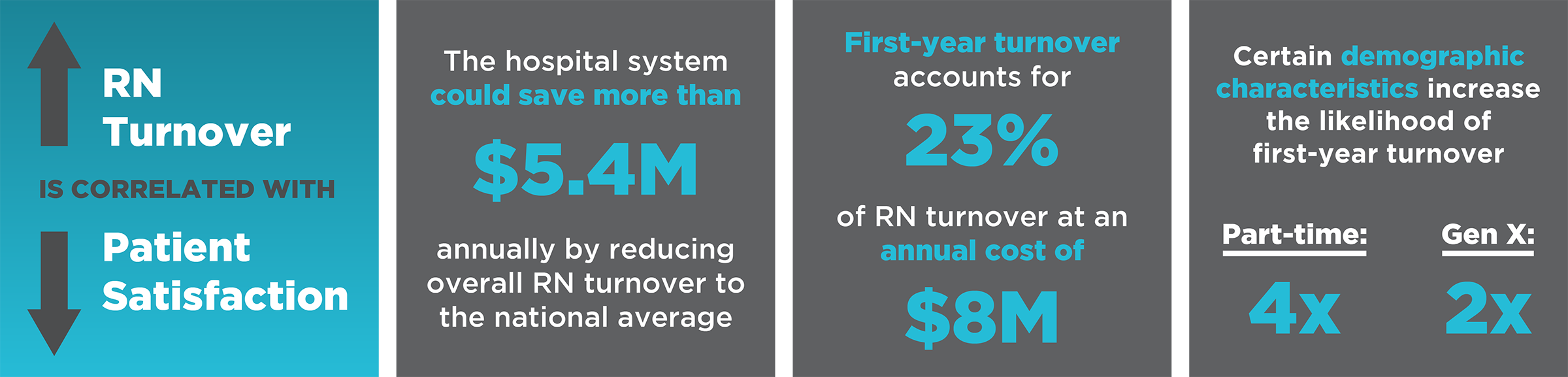
Employee Retention Data Analysis Provides Critical Insights
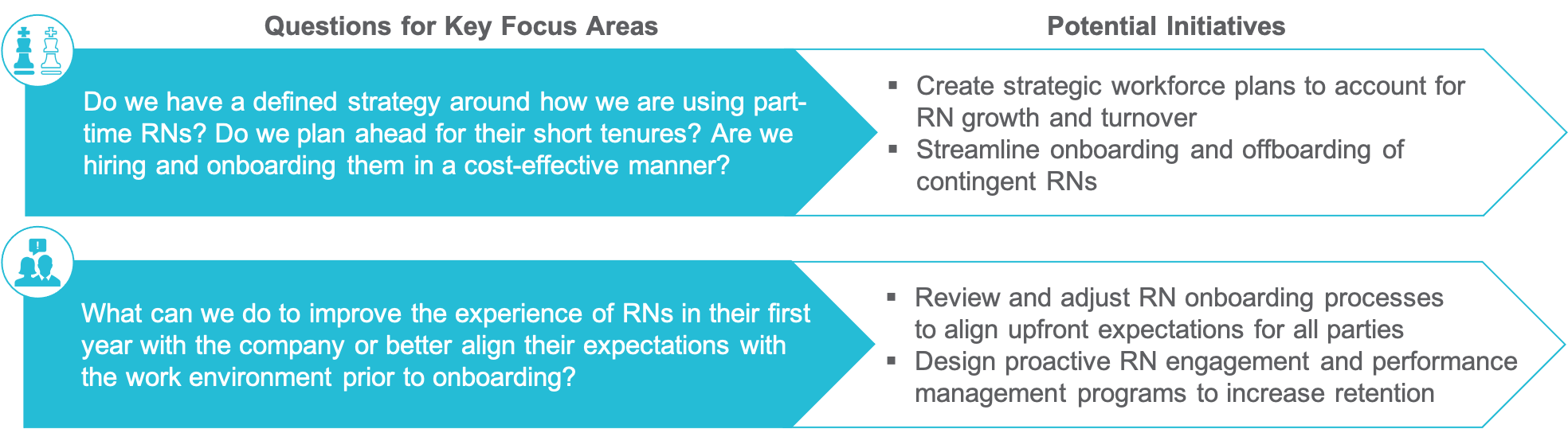
Every organization is different, but as you can see from the findings above, analysis of a combined data set that includes HR and operational data can reveal meaningful insights. The insights can then be leveraged to establish focus areas and develop pilot initiatives—often with compelling business cases. As an example, increasing first-year RN retention and addressing turnover challenges with part-time nurses might look something like this:
HR has access to an incredible amount of valuable data. By looking through the lens of people analytics, HR can inform, design, and lead critical initiatives to make a difference for patients, employees, and the organization as a whole. ScottMadden has been helping clients create and implement impactful solutions for their most challenging problems for over 35 years. Contact us today for a comprehensive assessment of your organization or help with a particular human capital challenge.
[1] 2020 NSI National Health Care Retention & RN Staffing Report