

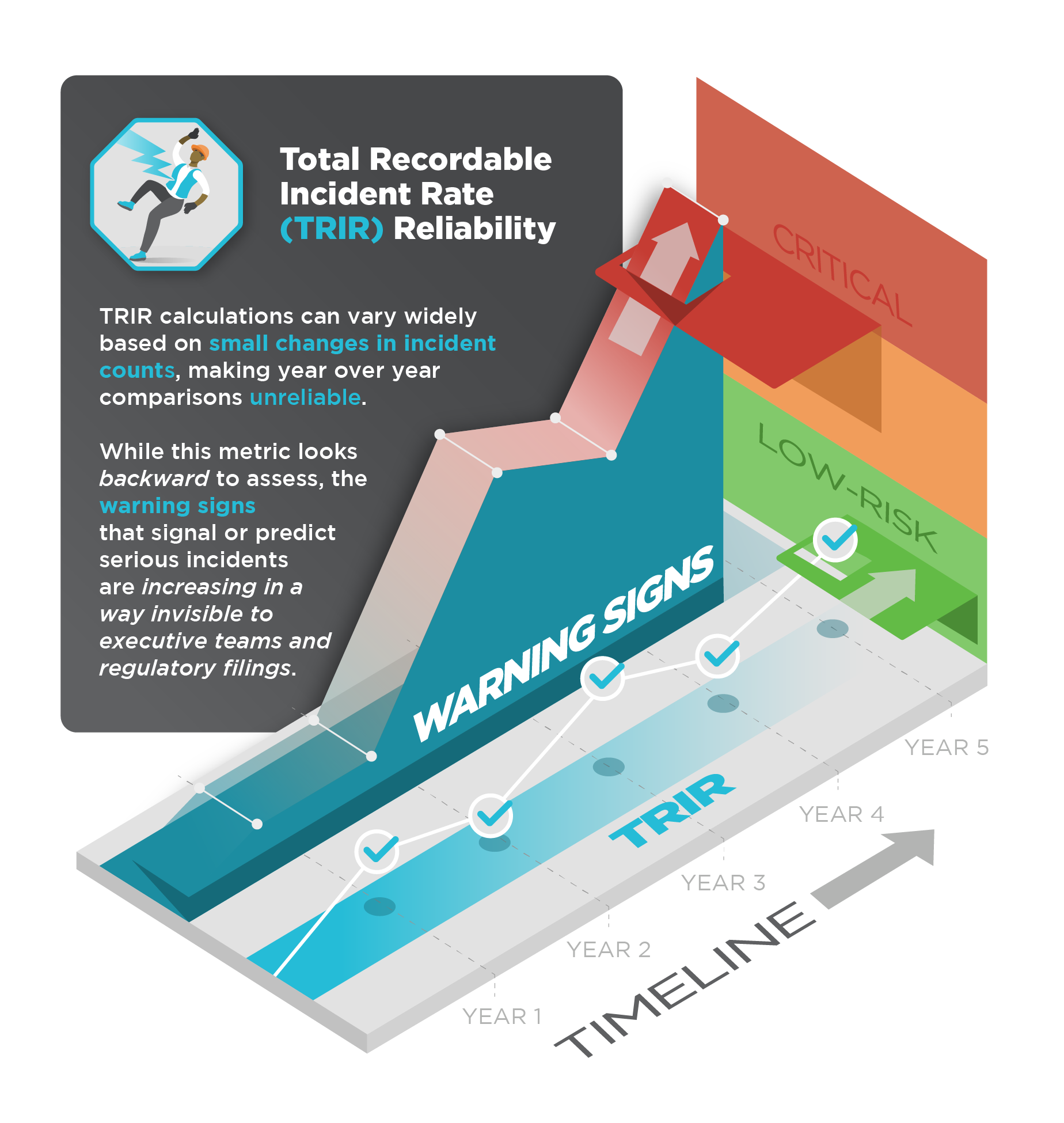
The Problem: Field Safety is Largely Reactive
The Shift: AI Makes Safety Predictive
Warning signs for serious incidents exist across multiple sources but remain invisible to human analysis. Every near miss, every shortcut taken, every piece of equipment used past its prime, and every rushed job completion generates data points. But these signals are buried across thousands of reports, work orders, time sheets, and notes. While dedicated teams could theoretically analyze all this information, it would require enormous resources that utilities simply don’t have.
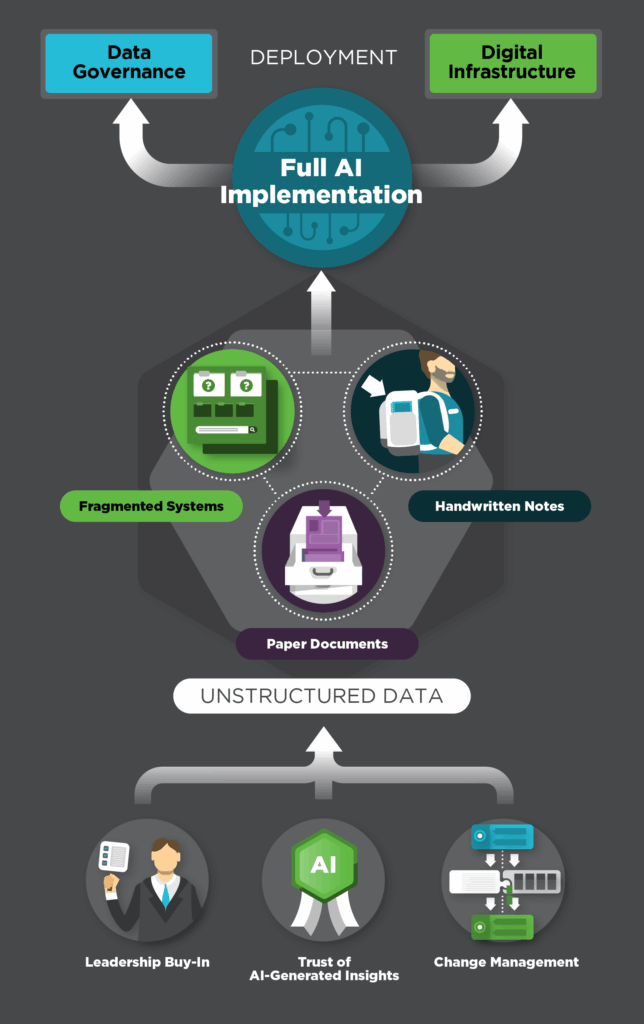
AI transforms this situation not only through improved pattern recognition but also by making unstructured data actionable. Traditional analytics can identify correlations in structured datasets. Still, the breakthrough with large language models (LLMs) lies in their ability to process the messy, real-world information where SIF precursors often reside, such as handwritten safety observations, free-text incident narratives, transcribed toolbox talks, and even voice recordings from the field. AI can identify when work involves high-energy sources such as heights, electricity, heavy equipment, or confined spaces and simultaneously lacks proper controls. It recognizes patterns such as rushed work (e.g., overtime or last-minute schedule changes) combined with high-energy tasks. This “widening of the aperture” allows leaders to shift from reactive incident management to predictive filed safety where it matters most.
The Problem: Field Safety is Largely Reactive

The Shift: AI Makes Safety Predictive
For example, in one recent benchmarking study, we observed that if an employee's reported discomfort persisted beyond 72 hours,
%
Likelihood Of A Recordable Injury
For example, in one recent benchmarking study, we observed that if an employee's report discomfort persisted beyond 72 hours,
%
Likelihood Of A Recordable Injury
On the Frontlines: Smart Field Safety Insights That Change the Game
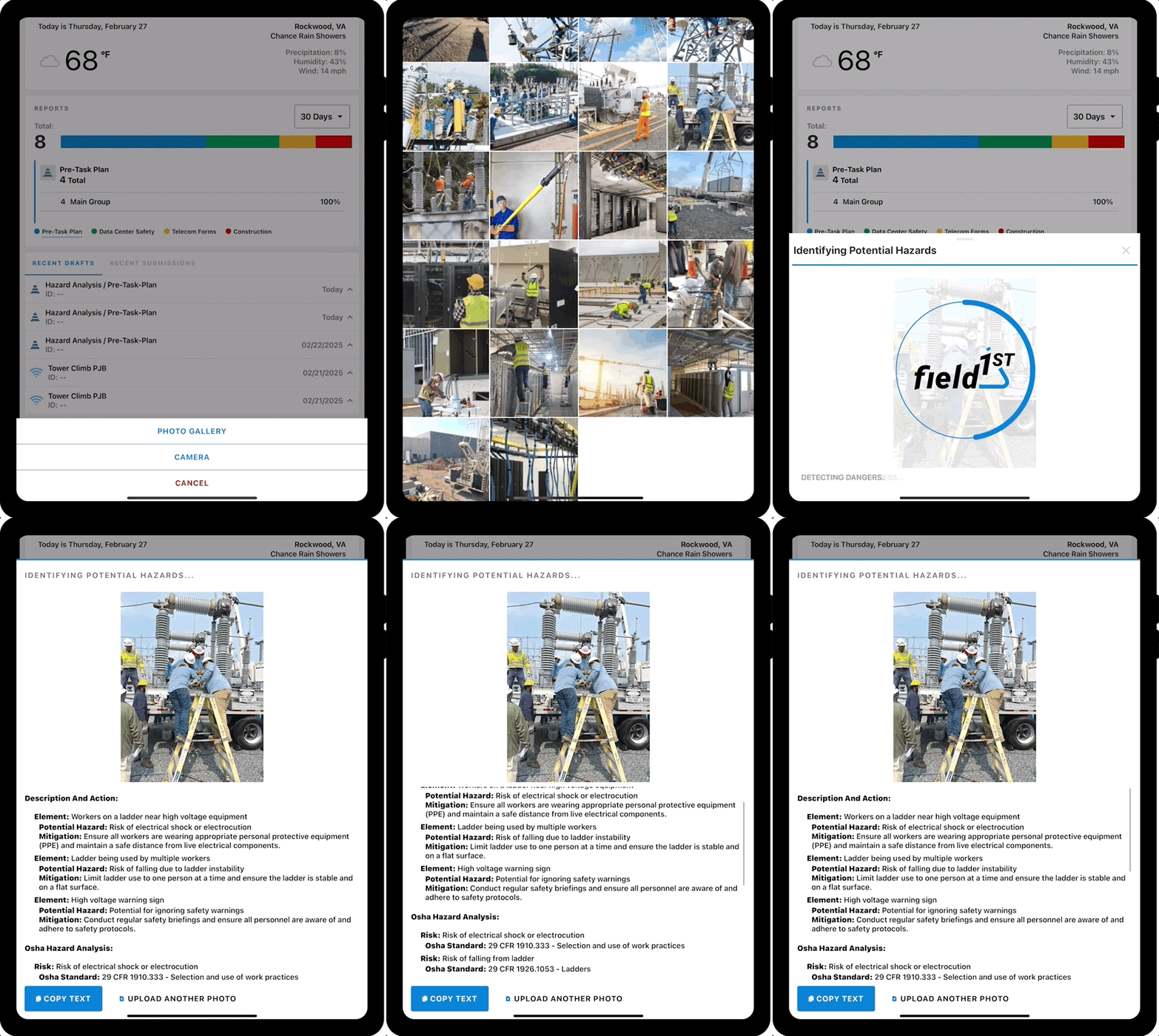
Beyond these pilots, AI is also enabling predictive field safety management at the planning stage. Some utilities are deploying AI-driven safety analytics systems that score the risk level of each upcoming job in advance, allowing supervisors to decide whether to proceed, pause, or add extra controls before work begins. Likewise, modern EHS platforms augmented with AI can automatically scan incident logs and safety observations to pinpoint patterns of elevated risk-for instance, flagging a spike in near misses under certain conditions-so that crew leads and safety managers can address root causes earlier. These kinds of proactive, cross-data insights are analogous to emerging industry solutions (e.g., automated job hazard analysis and risk alert systems), illustrating how AI can change the game on the front lines.
AI tools capable of transforming utility safety are emerging, with early adopters beginning to test their potential. While widespread deployment hasn’t occurred yet, the technology has matured to the point where implementation is becoming feasible for utilities ready to take the next step. For example, a leading battery manufacturer we recently supported identified immersive video-based safety training “dojos” and AI-driven risk assessment tools as high-potential solutions to reduce plant hazards. Our work with NXT GEN® Training, which involves utility workers in the field, has demonstrated that virtual simulations of high-risk scenarios and continuous AI monitoring can significantly reinforce safe behaviors. These innovations are initially being applied to specific use cases (e.g., LOTO, energy isolation, and electrical testing) to validate their impact before being rolled out more broadly.
If You're Not Using AI, You’re Already Behind
Lagging Indicators
Leading Indicators
Lagging Indicators
Leading Indicators
What ScottMadden Can Do for Predictive Field Safety
Implementing AI for safety presents significant challenges, including data quality issues, integrating with legacy systems, workforce readiness, and the complexity of training AI models on industry-specific safety scenarios. A well-structured AI pilot program can address these hurdles by starting small, rapidly prototyping solutions, testing feasibility, and learning what works before scaling. ScottMadden’s proven approach moves utilities from AI exploration to implementation through three key phases:

Phase 1: Discover and Prioritize

Phase 2: Pilot and Learn

Phase 3: Scale and Sustain
Phase 1: Discover and Prioritize
Phase 2: Pilot and Learn