
The Problem: Field Safety is Largely Reactive
Field safety in utilities has historically relied on Total Recordable Incident Rate (TRIR) as a key performance benchmark. This metric measures what has already occurred: injuries that have happened and reported incidents. While utilities track many safety indicators, the TRIR often receives disproportionate attention from executive teams and regulatory filings, driving decisions about resource allocation and the effectiveness of safety programs. Recent research by the Construction Safety Research Alliance has demonstrated limitations with TRIR as a measure of safety performance. Due to the statistical rarity of injuries, TRIR calculations can vary widely based on small changes in incident counts, making year-over-year comparisons unreliable for many organizations. While firms must track TRIR for regulatory compliance, this backward-looking metric fails to capture the warning signs that predict serious incidents. The daily behaviors, conditions, and near misses that signal catastrophic risk remain invisible. Serious injuries and fatalities (SIFs) have distinct precursors—specifically the absence of work planning and direct controls—that differ entirely from the factors causing minor injuries.
This trend is evident in the incident data. Despite utilities collecting more data through increased digitization of their safety systems, serious incidents have not proportionally decreased. Two major factors explain this disconnect. First, critical safety information remains siloed in paper-based systems, personal notes, and informal communications. Second, even digitized data often lacks the advanced analytical capabilities necessary to identify precursors to SIFs.
The Shift: AI Makes Safety Predictive
Warning signs for serious incidents exist across multiple sources but remain invisible to human analysis. Every near miss, every shortcut taken, every piece of equipment used past its prime, and every rushed job completion generates data points. But these signals are buried across thousands of reports, work orders, time sheets, and notes. While dedicated teams could theoretically analyze all this information, it would require enormous resources that utilities simply don’t have.
AI transforms this situation not only through improved pattern recognition but also by making unstructured data actionable. Traditional analytics can identify correlations in structured datasets. Still, the breakthrough with large language models (LLMs) lies in their ability to process the messy, real-world information where SIF precursors often reside, such as handwritten safety observations, free-text incident narratives, transcribed toolbox talks, and even voice recordings from the field. AI can identify when work involves high-energy sources such as heights, electricity, heavy equipment, or confined spaces and simultaneously lacks proper controls. It recognizes patterns like rushed work (e.g., overtime patterns or last-minute schedule changes) combined with high-energy tasks. This “widening of the aperture” allows leaders to shift from reactive incident management to proactive risk prevention where it matters most.
The Problem: Field Safety is Largely Reactive
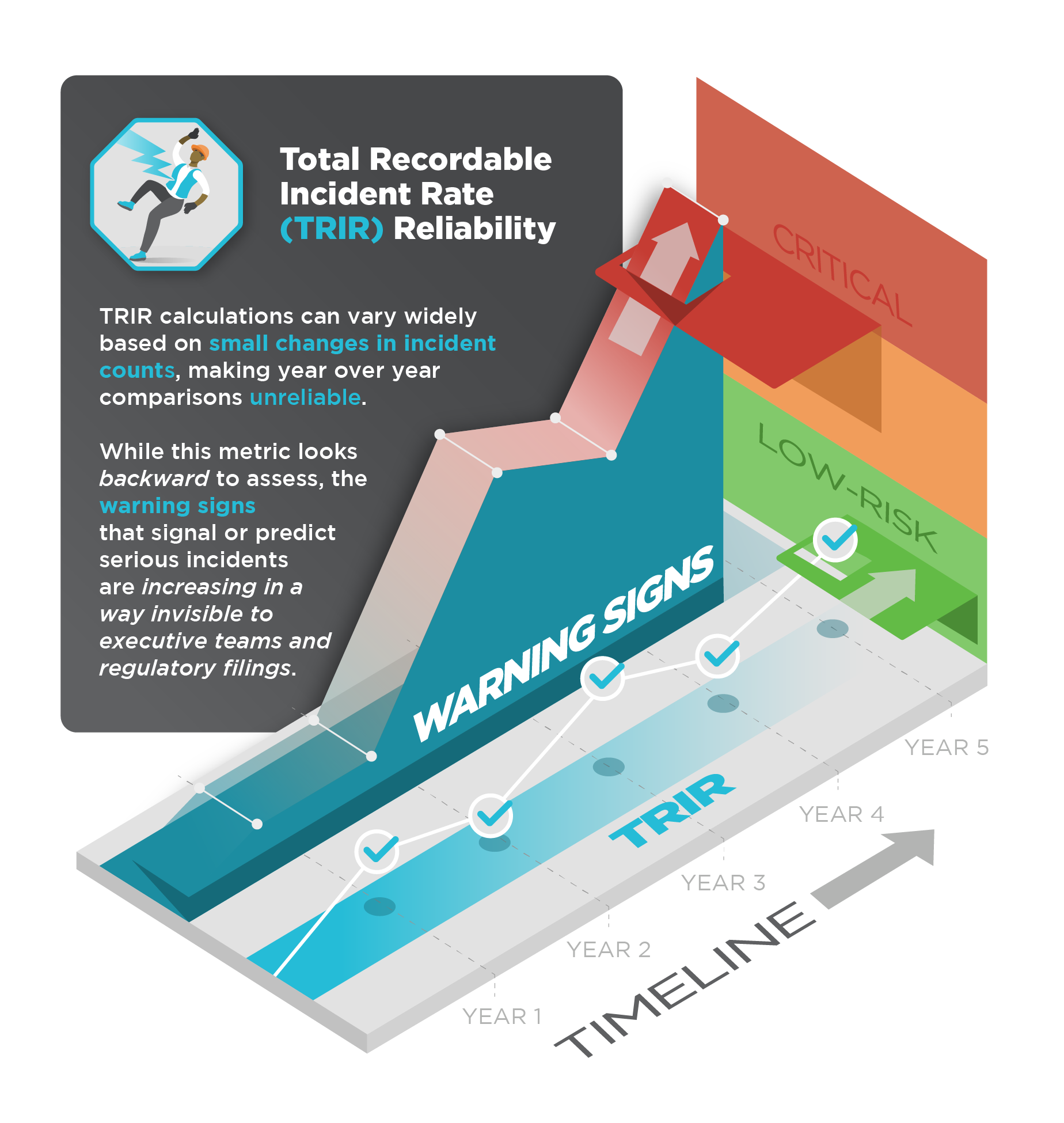
Field safety in utilities has historically relied on Total Recordable Incident Rate (TRIR) as a key performance benchmark. This metric measures what has already occurred: injuries that have happened and reported incidents. While utilities track many safety indicators, the TRIR often receives disproportionate attention from executive teams and regulatory filings, driving decisions about resource allocation and the effectiveness of safety programs. Recent research by the Construction Safety Research Alliance has demonstrated limitations with TRIR as a measure of safety performance. Due to the statistical rarity of injuries, TRIR calculations can vary widely based on small changes in incident counts, making year-over-year comparisons unreliable for many organizations. While firms must track TRIR for regulatory compliance, this backward-looking metric fails to capture the warning signs that predict serious incidents. The daily behaviors, conditions, and near misses that signal catastrophic risk remain invisible. Serious injuries and fatalities (SIFs) have distinct precursors—specifically the absence of work planning and direct controls—that differ entirely from the factors causing minor injuries.
This trend is evident in the incident data. Despite utilities collecting more data through increased digitization of their safety systems, serious incidents have not proportionally decreased. Two major factors explain this disconnect. First, critical safety information remains siloed in paper-based systems, personal notes, and informal communications. Second, even digitized data often lacks the advanced analytical capabilities necessary to identify precursors to SIFs.
The Shift: AI Makes Safety Predictive
Warning signs for serious incidents exist across multiple sources but remain invisible to human analysis. Every near miss, every shortcut taken, every piece of equipment used past its prime, and every rushed job completion generates data points. But these signals are buried across thousands of reports, work orders, time sheets, and notes. While dedicated teams could theoretically analyze all this information, it would require enormous resources that utilities simply don’t have.
AI transforms this situation not only through improved pattern recognition but also by making unstructured data actionable. Traditional analytics can identify correlations in structured datasets. Still, the breakthrough with large language models (LLMs) lies in their ability to process the messy, real-world information where SIF precursors often reside, such as handwritten safety observations, free-text incident narratives, transcribed toolbox talks, and even voice recordings from the field. AI can identify when work involves high-energy sources such as heights, electricity, heavy equipment, or confined spaces and simultaneously lacks proper controls. It recognizes patterns like rushed work (e.g., overtime patterns or last-minute schedule changes) combined with high-energy tasks. This “widening of the aperture” allows leaders to shift from reactive incident management to proactive risk prevention where it matters most.
For example, in one recent benchmarking study, we observed that if an employee's report discomfort persisted beyond 72 hours,
%
Likelihood Of A Recordable Injury
the likelihood of a recordable injury jumped to 75%. Armed with such insight, safety teams can intervene with ergonomic adjustments or medical attention before a minor issue escalates—a predictive approach nearly impossible under traditional TRIR-focused methods. By capturing and analyzing these precursors, AI enables a transition from simply tracking what went wrong to actively preventing what could go wrong.
For example, in one recent benchmarking study, we observed that if an employee's report discomfort persisted beyond 72 hours,
%
Likelihood Of A Recordable Injury
the likelihood of a recordable injury jumped to 75%. Armed with such insight, safety teams can intervene with ergonomic adjustments or medical attention before a minor issue escalates—a predictive approach nearly impossible under traditional TRIR-focused methods. By capturing and analyzing these precursors, AI enables a transition from simply tracking what went wrong to actively preventing what could go wrong.
On the Frontlines: AI Tools That Change the Game
AI tools capable of transforming utility safety are emerging, with early adopters beginning to test their potential. While widespread deployment hasn’t occurred yet, the technology has matured to the point where implementation is becoming feasible for utilities ready to take the next step. For example, a leading battery manufacturer we recently supported identified immersive video-based safety training “dojos” and AI-driven risk assessment tools as high-potential solutions to reduce plant hazards. Our work with NXT GEN® Training, which involves utility workers in the field, has demonstrated that virtual simulations of high-risk scenarios and continuous AI monitoring can significantly reinforce safe behaviors. These innovations are initially being applied to specific use cases (e.g., LOTO, energy isolation, and electrical testing) to validate their impact before being rolled out more broadly.
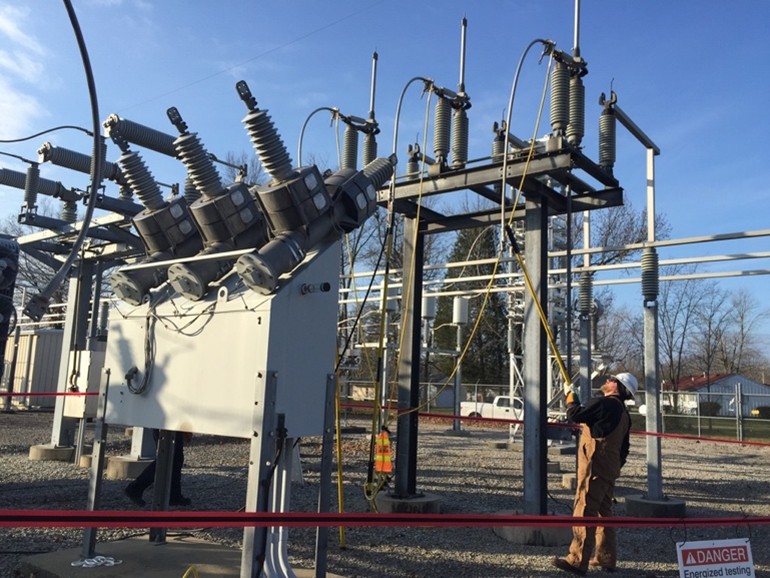
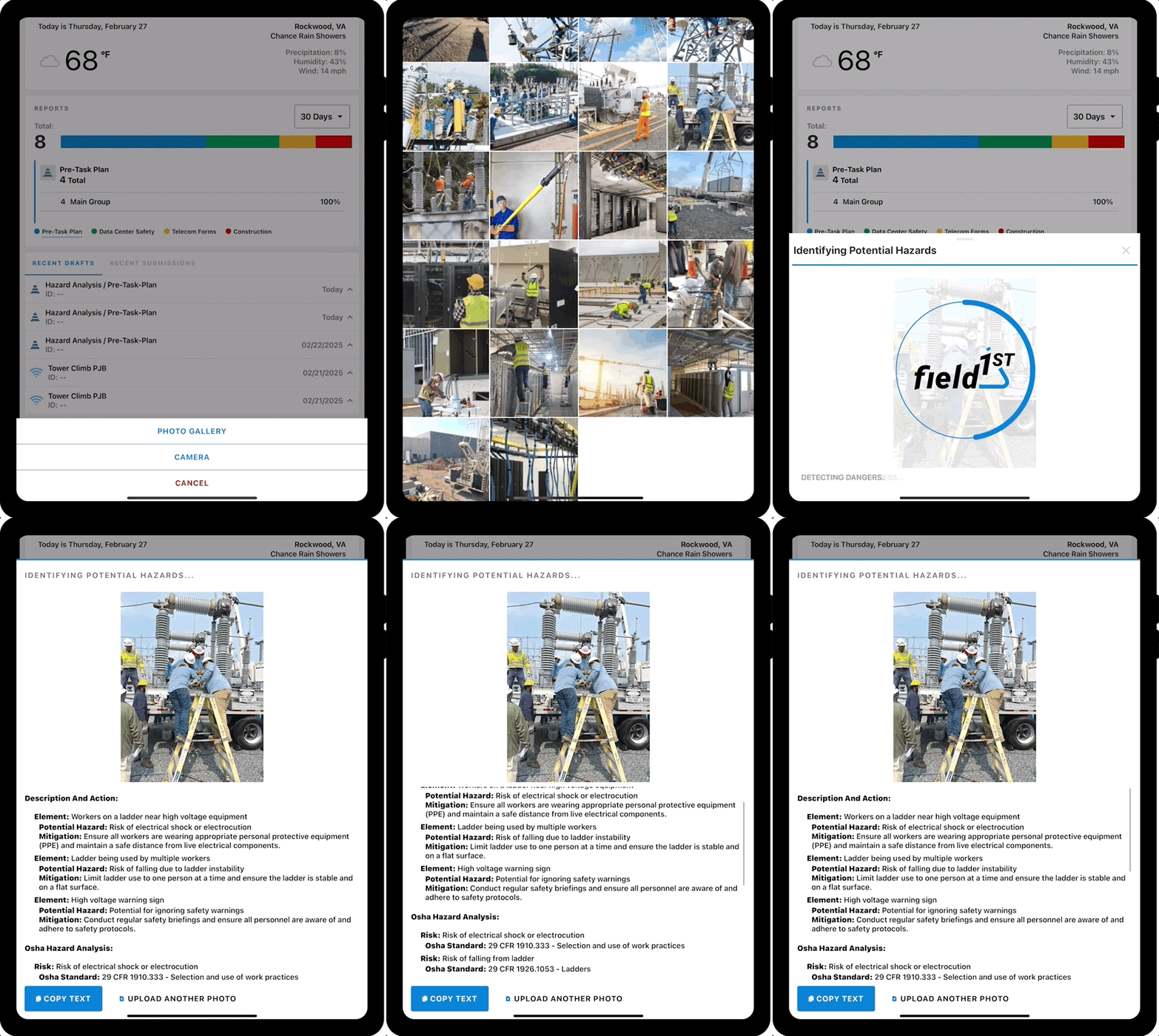
In transmission and distribution operations, AI-powered visual analysis can now process drone footage, photos, and vehicle camera feeds to identify equipment damage, vegetation encroachment, PPE adherence, or unsafe work practices. [See example image below.] Several utilities have begun pilot programs that leverage these capabilities, although most are still establishing the data collection processes necessary to effectively feed these systems. (For more on AI applications in T&D, see ScottMadden’s comprehensive overview of AI Use Cases in Transmission and Distribution.) For natural gas operations, LLMs and other machine learning models can analyze historical patterns to predict high-risk conditions and optimize emergency response protocols. These applications remain in early deployment phases as utilities work to integrate disparate data sources and establish trust in AI-generated recommendations. (Learn about additional AI use cases in gas operations in ScottMadden’s industry analysis of AI Use Cases in the Natural Gas Industry.) Voice-enabled AI assistants represent another emerging capability. These tools could enable field crews to query safety procedures through natural language, potentially improving access to critical information before or during work execution. While the AI technology exists, most utilities are still digitizing their safety data and documentation to make it accessible to these systems.
Beyond these pilots, AI is also enabling predictive safety management at the planning stage. Some utilities are deploying AI-driven risk assessment systems that score the risk level of each upcoming job in advance, allowing supervisors to decide whether to proceed, pause, or add extra controls before work begins. Likewise, modern EHS platforms augmented with AI can automatically scan incident logs and safety observations to pinpoint patterns of elevated risk—for instance, flagging a spike in near misses under certain conditions—so that crew leads and safety managers can address root causes earlier. These kinds of proactive, cross-data insights are analogous to emerging solutions in the industry (e.g., automated job hazard analysis and risk alert systems), illustrating how AI can change the game on the frontlines.
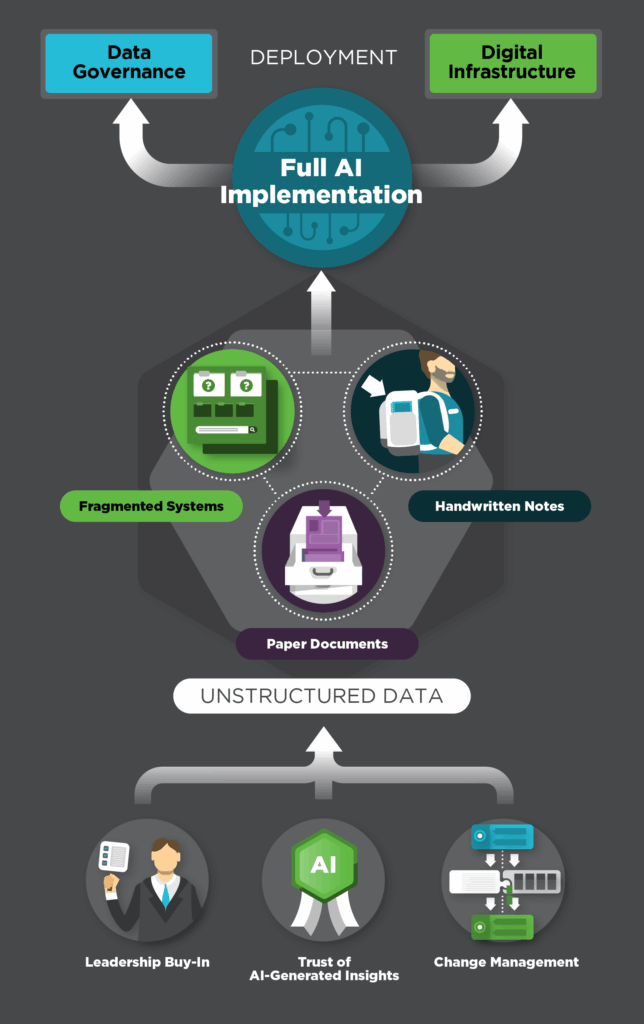
The gap between AI’s capabilities and actual deployment stems from both technological and organizational challenges. While AI can process unstructured data from paper documents, handwritten notes, and fragmented systems, utilities still need the organizational commitment to digitize these sources and integrate them into workflows. The technology can work with messy, real-world data, which is one of AI’s key advantages over traditional analytics. Success requires leadership buy-in, change management, and a willingness to trust AI-generated insights alongside human judgment. Utilities that have strong safety cultures and a commitment to innovation are implementing AI today, even with imperfect data. Those waiting for perfect data governance and digital infrastructure may miss the opportunity to use AI to help create it. Utilities do not need perfect data to begin – a rapid prototyping approach can quickly validate AI concepts and build confidence even with imperfect information. See ScottMadden’s approach to Practical AI for Utilities – AI Innovation and Prototyping for strategies to kick-start these efforts.
If You're Not Using AI, You’re Already Behind
Companies currently implementing AI-based safety analytics and focusing on leading safety metrics are developing capabilities that will likely become industry standard. Organizations relying solely on traditional lagging indicators may find themselves at a competitive disadvantage in attracting safety-conscious workers and clients. Notably, our recent benchmarking found that industry leaders have shifted to proactive safety KPIs—tracking metrics such as near misses reported, safety concerns closed promptly, and the frequency of leadership safety conversations—to actively gauge risk before injuries occur. These forward-looking measures, paired with AI analytics, give early movers a head start in preventing incidents that lagging metrics alone might miss.
Lagging Indicators
| KPI | Description |
|---|---|
| TRIR | Total Recordable Incident Rate |
| Lost Time Incident Rate | Frequency of work-related injuries causing time off |
| Serious Injuries & Fatalities (SIFs) | Critical life-altering incidents |
| Recordables greater than 72hr Discomfort | Injuries reported after discomfort exceeds 72 hours |
| OSHA-Reportable Incidents | Regulatory safety reports filed |
| Days Away, Restricted, or Transferred (DART) | Work Disruption due to injury severity |
Leading Indicators
| KPI | Description |
|---|---|
| Near Misses Reported | Hazards reported before harm occurs |
| Ergonomic Flags Raised | Reports of physical strain or poor workstation setup |
| Safety Observations Submitted | Field-based hazard reports and safe behaviors |
| Field Coaching Sessions | Supervisor-led safety coaching conversations |
| Leadership Safety Walks | Management-led job site inspections and conversations |
| Job Briefs w/ AI Risk Alerts | Job plans augmented with predictive hazard prompts |
Lagging Indicators
| KPI | Description |
|---|---|
| TRIR | Total Recordable Incident Rate |
| Lost Time Incident Rate | Frequency of work-related injuries causing time off |
| Serious Injuries & Fatalities (SIFs) | Critical life-altering incidents |
| Recordables greater than 72hr Discomfort | Injuries reported after discomfort exceeds 72 hours |
| OSHA-Reportable Incidents | Regulatory safety reports filed |
| Days Away, Restricted, or Transferred (DART) | Work Disruption due to injury severity |
Leading Indicators
| KPI | Description |
|---|---|
| Near Misses Reported | Hazards reported before harm occurs |
| Ergonomic Flags Raised | Reports of physical strain or poor workstation setup |
| Safety Observations Submitted | Field-based hazard reports and safe behaviors |
| Field Coaching Sessions | Supervisor-led safety coaching conversations |
| Leadership Safety Walks | Management-led job site inspections and conversations |
| Job Briefs w/ AI Risk Alerts | Job plans augmented with predictive hazard prompts |
AI technology amplifies human expertise rather than replaces it. Picture a safety manager who once spent hours combing through incident reports now receiving AI-generated alerts about emerging risk patterns. Field supervisors get real-time notifications when conditions mirror those that preceded past incidents. Crews receive dynamic safety briefings tailored to the specific hazards their work site presents that day and at that location, with context around the work and the crew. Human judgment, experience, and relationships remain irreplaceable, but AI ensures this wisdom gets applied where it matters most to keep everyone safe.
What ScottMadden Can Do
Implementing AI for safety presents significant challenges, including data quality issues, integrating with legacy systems, workforce readiness, and the complexity of training AI models on industry-specific safety scenarios. A well-structured AI pilot program can address these hurdles by starting small, rapidly prototyping solutions, testing feasibility, and learning what works before scaling. ScottMadden’s proven approach moves utilities from AI exploration to implementation through three key phases:
Phase 1: Discover and Prioritize
Identify high-impact safety AI use cases that align with your operational realities; assess data readiness and integration requirements; quantify potential safety improvements and ROI.
Phase 2: Pilot and Learn
Design controlled pilots that test AI effectiveness in your specific safety contexts; build stakeholder confidence through demonstrated results; refine approaches based on real-world learnings.
Phase 3: Scale and Sustain
Develop enterprise-wide implementation roadmaps; embed AI capabilities through change management and training; establish governance frameworks for responsible AI use.
Phase 1: Discover and Prioritize
Identify high-impact safety AI use cases that align with your operational realities; assess data readiness and integration requirements; quantify potential safety improvements and ROI.
Phase 2: Pilot and Learn
Design controlled pilots that test AI effectiveness in your specific safety contexts; build stakeholder confidence through demonstrated results; refine approaches based on real-world learnings.
Phase 3: Scale and Sustain
Develop enterprise-wide implementation roadmaps; embed AI capabilities through change management and training; establish governance frameworks for responsible AI use.
The path from reactive to predictive safety requires both technological and organizational transformation. Through our deep knowledge of the utility industry, combined with practical experience in AI implementation, ScottMadden guides utilities through their journeys to modernize their field safety systems. Learn more about our comprehensive approach in AI in Energy and Utilities: From Exploration to Action with Trusted Expertise.
Alex Tylecote and Matthew Reed also contributed to this article.