



Kaitlyn Schmitt is also a contributing author.
In 2024, ScottMadden and APQC conducted the seventh cycle of the biennial finance shared services benchmarking study—the industry’s most comprehensive benchmark of finance shared services performance. This finance shared services benchmarking study examines critical benchmarking metrics, including delivery models, governance structures, staffing levels, and technology adoption. Shared services benchmarking can help organizations optimize performance and drive operational excellence.
Our finance shared services benchmarking analysis identified top-performing organizations that consistently achieved top-quartile results across eight finance shared services KPIs, demonstrating excellence in critical benchmarking metrics: staffing efficiency, process cycle times, customer service quality, and cost per transaction. These findings from a finance KPI benchmarking study provide actionable performance benchmarks for organizations seeking to optimize their shared services operations. The top performers were compared to the other participants, termed the comparison group, and were more likely to engage in three key practices:
- Employ end-to-end processes
- Use global process owners for process governance
- Leverage robust technology, automation, and advanced analytics
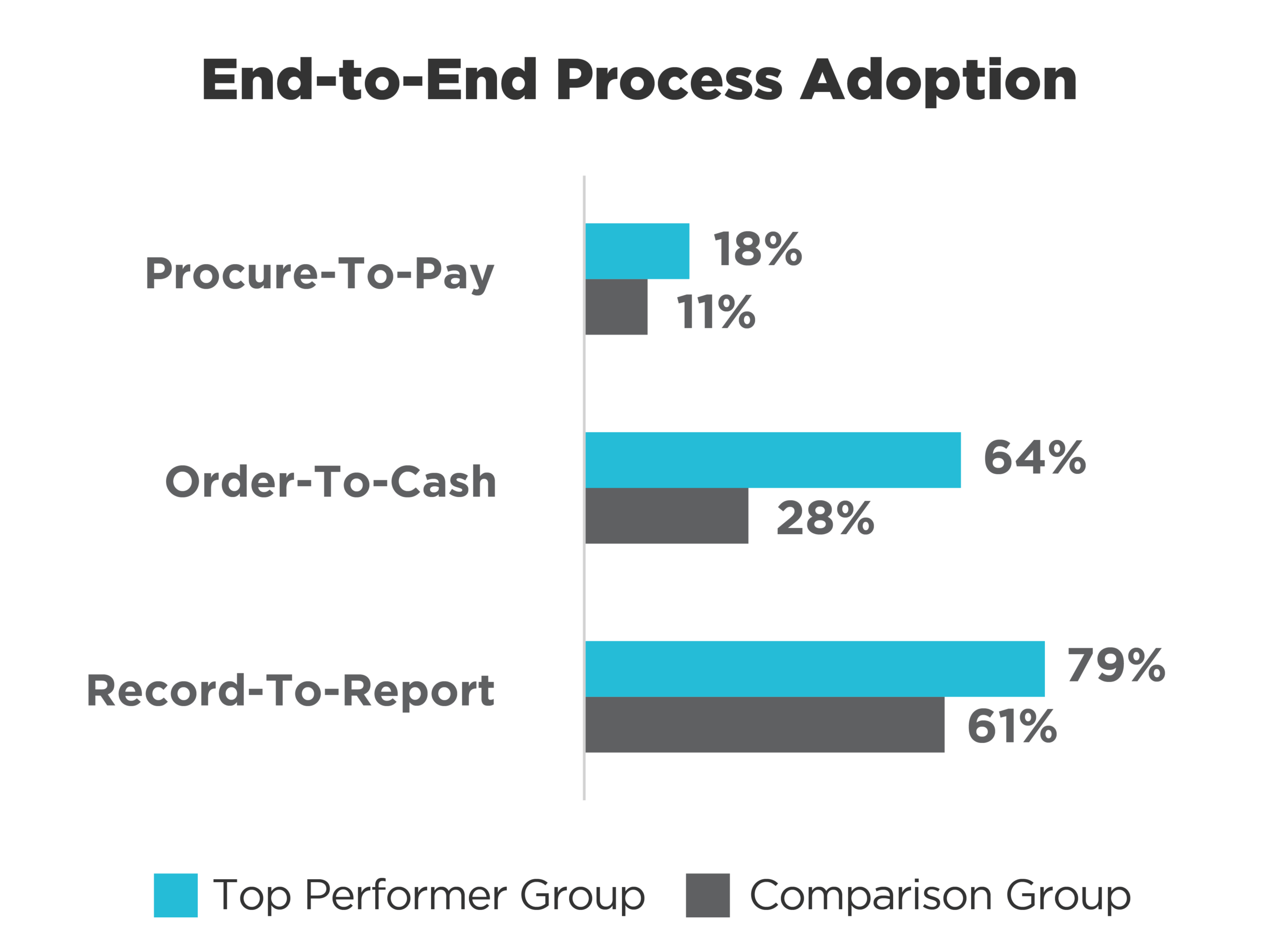
Top performers adopt end-to-end processes to address root causes and improve coordination across the entire finance workflow.
A significantly larger percentage of the top-performing group has adopted end-to-end (E2E) processes than other participants. Nearly 80% of top performers have implemented record-to-report (R2R) processes, whereas only 61% of the comparison group have. Further, top performers were more than twice as likely to have adopted order-to-cash (O2C) processes.
ScottMadden sees this broader E2E adoption often tied to efforts to improve cash flow and reduce downstream work, particularly in accounts receivable and collections. Much of this rework can be traced to data entry errors originating upstream in sales order processing. By managing the entire process continuum, organizations can resolve underlying issues rather than repeatedly treating symptoms.
Adopting E2E processes enables organizations to holistically optimize workflows, improving coordination, collaboration, and accountability between upstream and downstream activities. This integrated view of process performance is a critical enabler of efficiency and service quality in high-performing finance organizations.
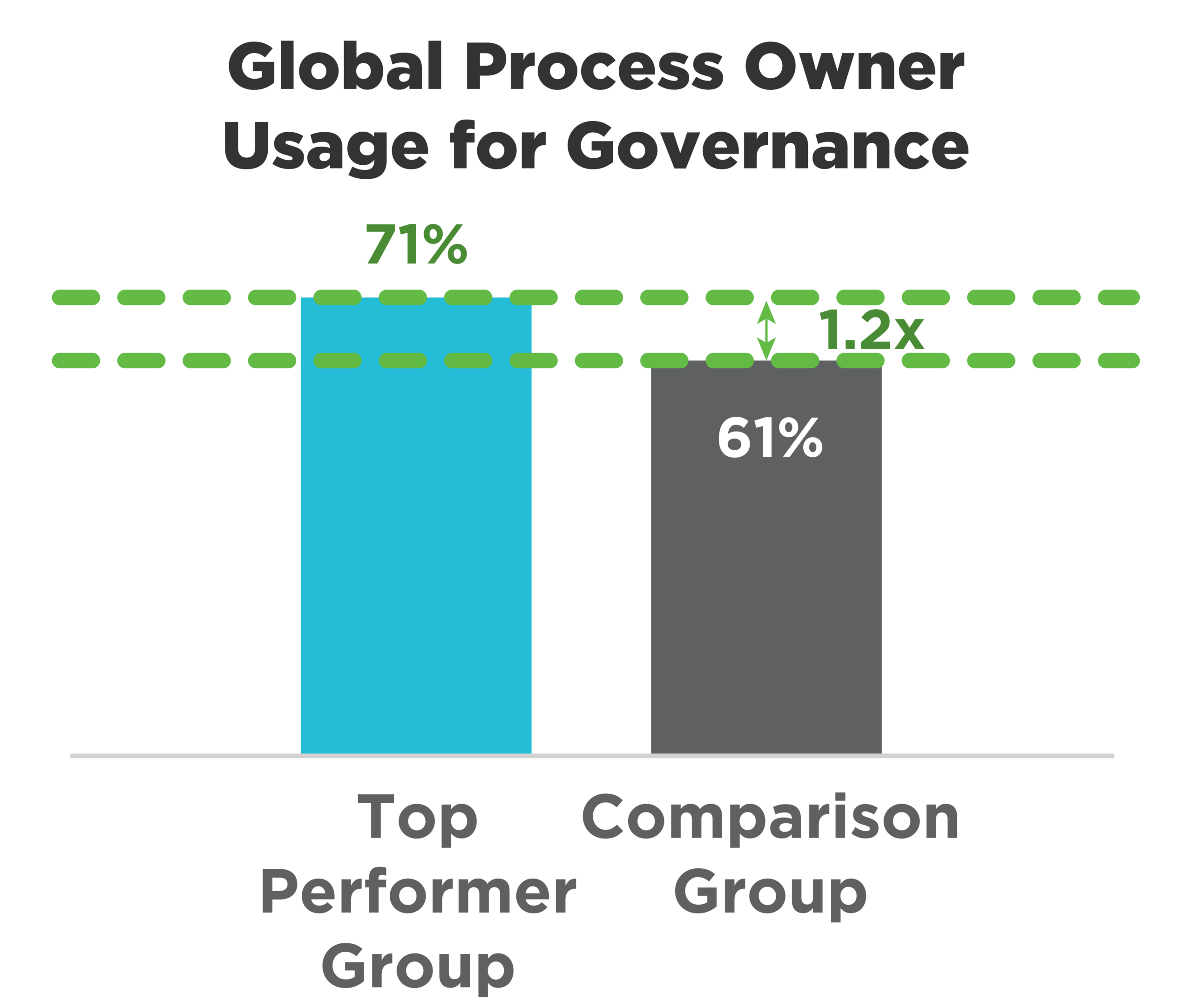
While service level agreements (SLAs) are the most common model for global process governance across organizations, top performers use global process owners most often. A global process owner is a single individual accountable for the performance and improvement of a given process across the entire organization.
Specifically, 71% of top performers leverage global process owners, compared to 61% of the comparison group. This represents a clear upward trend, as adoption among top performers has increased from 39% in 2020 to 63% in 2022 and now reaches more than 7 in 10 leading organizations.
Rising use of global process owners reflects the value of clear accountability and enterprise-wide process oversight.
This steady increase reflects a growing recognition of the value a dedicated individual brings in optimizing complex processes, ensuring accountability, goal alignment, innovation, continuous improvement, quality, and standardization across the enterprise.
Finance Shared Services Benchmarking: Technology, Automation, and Analytics
Top performers demonstrate greater maturity in technology adoption. At the median, top performers leverage six of the nine types of technologies studied, compared to five for the comparison group. These technologies enhance efficiency, as evidenced by top performers’ faster median cycle times for the monthly financial close, likely due to their extensive use of financial close automation (80% of top performers vs. 44% of the comparison group). Top performers are also 1.4 to 1.9 times more likely to have implemented automation technologies, such as robotic process automation, chatbots, and generative AI, which enables greater efficiency and leaner staffing.
Top performers take a strategic approach to automation and analytics, deploying technologies in well-integrated suites rather than isolated pilots.
ScottMadden has noticed that top performers often build automation centers of expertise that create a comprehensive strategy, placing the right technology on the right tasks. The deployment of well–thought–out suites of technology, rather than opportunistic proof-of-concept projects from the comparison group, is likely driving these results.
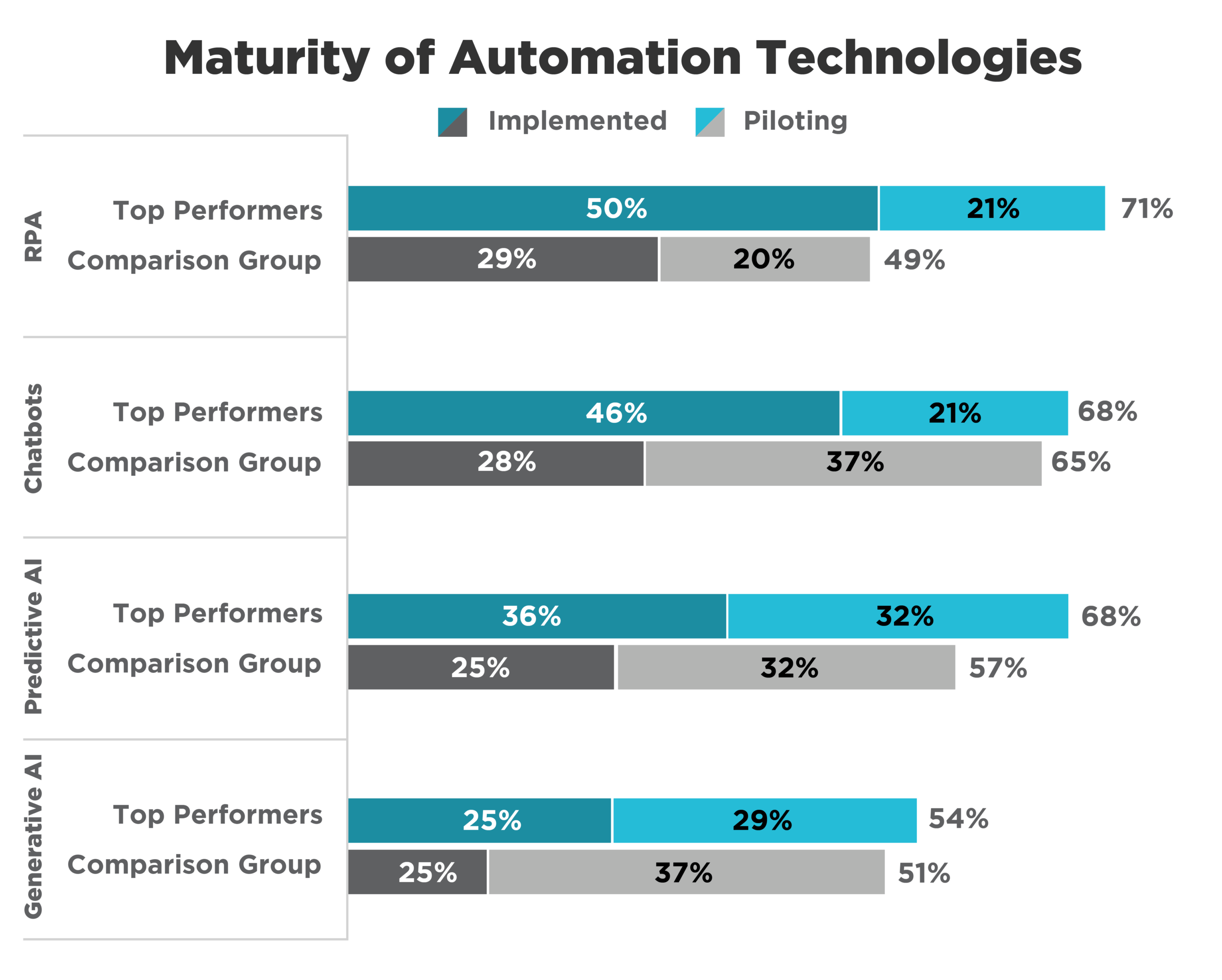
Interestingly, top performers and the comparison group experience different challenges in adopting AI. Top performers face challenges, such as shortages of skilled resources, technical expertise, and technology maturity. At the same time, the comparison group struggles with change-related challenges, such as a lack of organizational buy-in and stakeholder readiness.
ScottMadden has noticed a general misunderstanding of what AI can and should do, compounded by stakeholders’ mistrust of AI due to poor data, errors, and bias. This has made it challenging for both top performers and other benchmarked organizations to make significant strides at this early stage of AI integration into shared services processes.
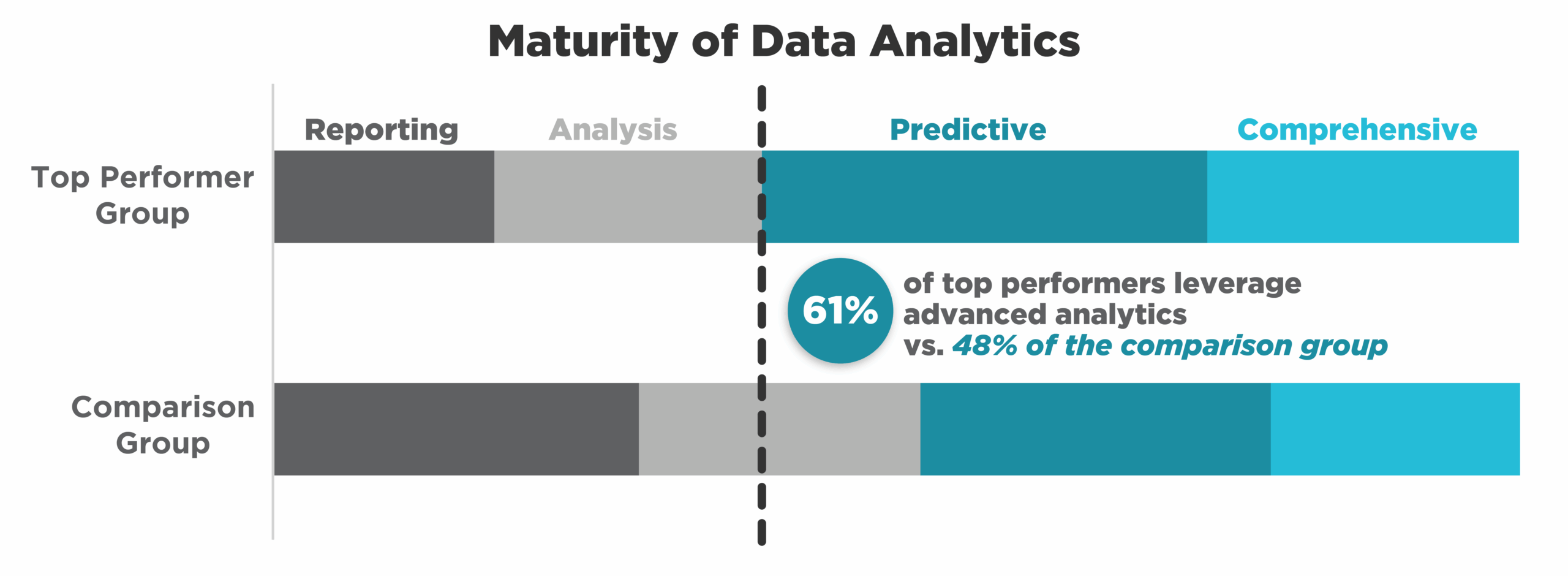
Additionally, top performers exhibit greater analytics maturity, with 61% leveraging advanced analytics with a predictive or comprehensive focus. Predictive analytics involves on-demand data available via dashboards, while comprehensive analytics incorporates structured and unstructured data, dashboards, and predictive models. In contrast, the comparison group primarily focuses on reporting and analysis, using metrics with some analytics in discrete systems or with data warehousing. This maturity of data analytics enables top performers to make data-driven improvements, further supporting their performance.
Recommendations
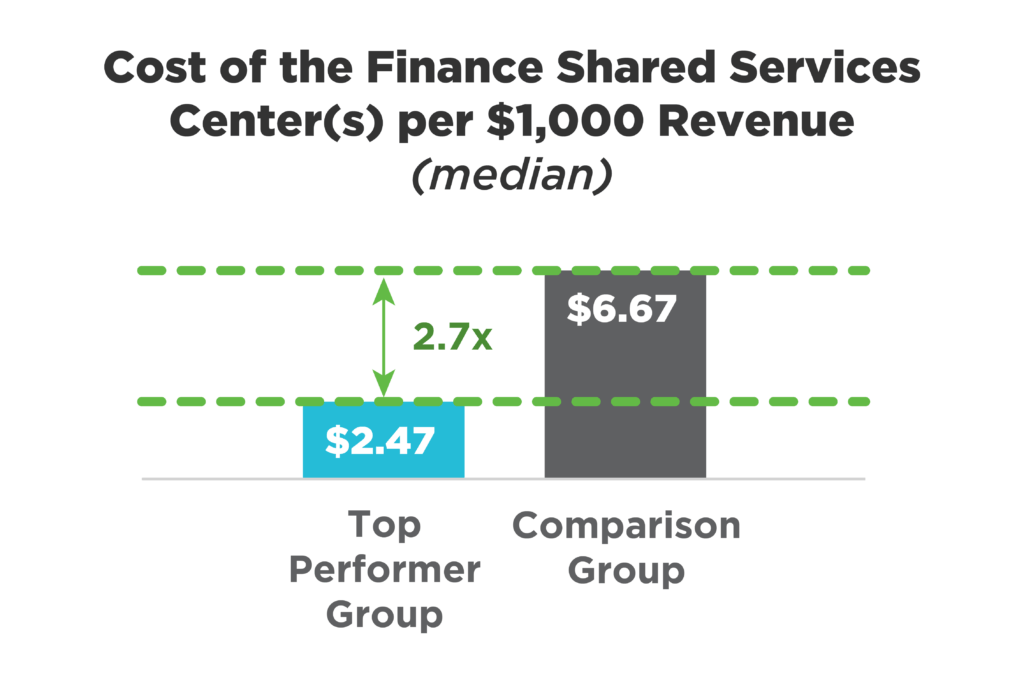
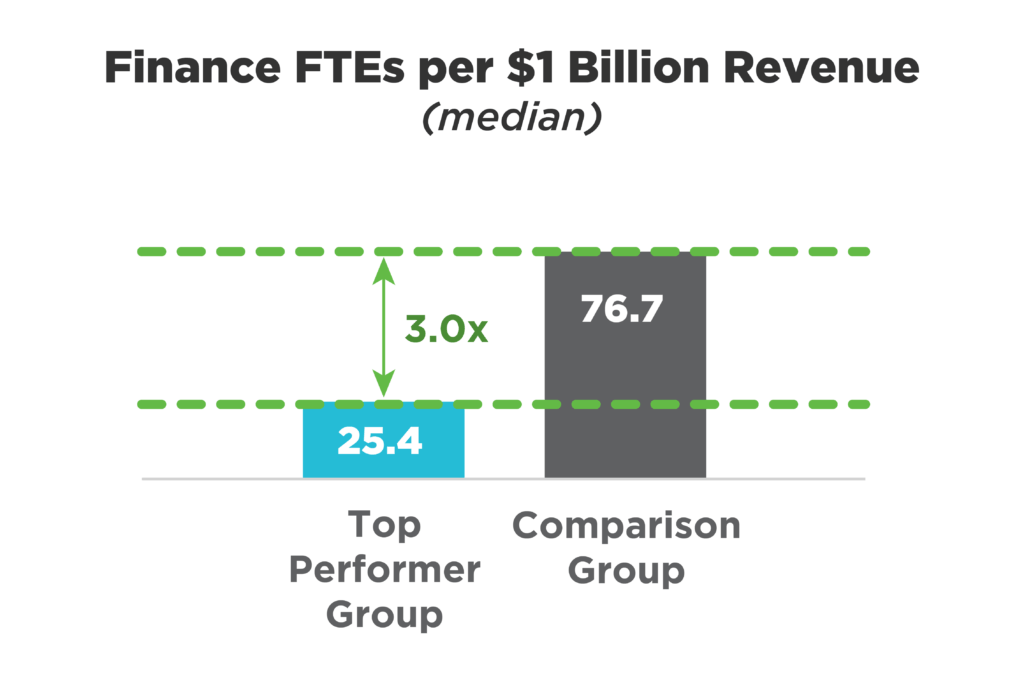
The 2024 Finance Shared Services benchmarking study highlights the practices and benchmarking metrics that distinguish top-performing organizations from their peers. These levers drive superior performance, with top performers achieving median cost and staffing efficiencies that are two to three times better than those of the comparison group.
For finance shared services leaders, these insights offer actionable takeaways to enhance their operations and improve efficiency, quality, and customer service:
- Optimize workflows with end-to-end processes, with emphasis on O2C
- Enhance accountability with global process owners while maintaining transparency through SLAs
- Invest in technology and advanced analytics while continuing to understand the benefits and challenges of AI
- Recognize and address both technical and change-related challenges in adopting new technologies
These approaches can help finance shared services leaders position their organizations for top performance, driving both operational excellence and strategic value. Contact ScottMadden to learn more.