



Natural Gas LDCs Are at a Crossroads
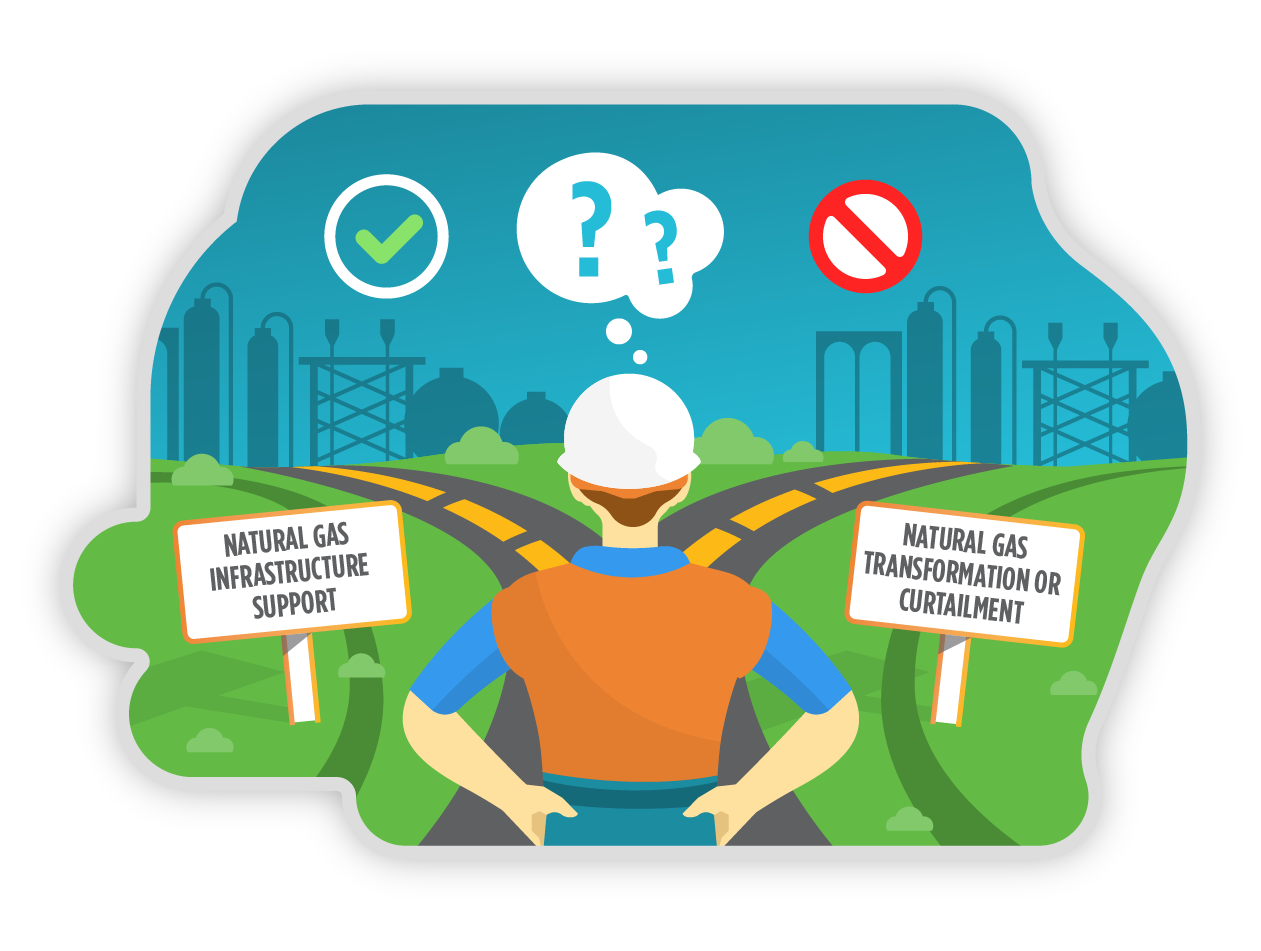
As the regulatory landscape shifts and decarbonization efforts intensify, natural gas local distribution companies (LDCs) find themselves at a crossroads. While some jurisdictions support long-term investments in gas infrastructure, others are signaling a fundamental transformation, or even contraction, of the role of gas in the energy mix.
For LDC leadership, this raises a critical question:
How do you make sound, forward-looking decisions today in the face of such uncertainty?
Natural Gas LDCs Are at a Crossroads
As the regulatory landscape shifts and decarbonization efforts intensify, natural gas local distribution companies (LDCs) find themselves at a crossroads. While some jurisdictions support long-term investments in gas infrastructure, others are signaling a fundamental transformation–or even contraction–of the role of gas in the energy mix.
For LDC leadership, this raises a critical question:
How do you make sound, forward-looking decisions today in the face of such uncertainty?
Some States Have Actions Restricting Natural Gas...
Specific States to Note
Washington
The state has acted to both restrict natural gas and block restrictions on it.
California
This state has taken significant steps to phase out natural gas in buildings. In 2022, state regulators voted to develop rules that would effectively ban the sale of natural gas-powered heating and hot water systems by 2030. This initiative is part of California’s broader strategy to reduce greenhouse gas emissions from buildings.
Michigan
The state has acted to both restrict natural gas and block restrictions on it.
New York
In 2023, New York became the first state to pass a law banning natural gas hookups in most new buildings. The legislation prohibits fossil fuel lines for heating and cooking in new constructions under seven stories starting in 2026 and for taller buildings beginning in 2029.
Maryland
In 2023, Maryland Governor Wes Moore signed an executive order directing state agencies to adopt regulations phasing out gas-fired furnaces for home heating. Additionally, Montgomery County passed a law requiring most new buildings more than 35,000 square feet to phase out natural gas by 2040.
...Others Have Implemented "Bans on Natural Gas Bans"
Specific States to Note
Washington
While several Washington cities had put forth measures restricting natural gas, in Nov. 2024, voters approved an initiative that mandates providing gas to eligible customers and prohibits policies that discourage its use.
Missouri
In 2021, the state enacted SB 230, preventing local governments from passing ordinances that restrict or prohibit natural gas use in homes and businesses. While no Missouri city had introduced such bans, the law was adopted as a preemptive measure to preserve energy choice.
Michigan
Michigan has competing legislation in development. SB 41 seeks to amend building codes to ban gas appliances. SB 10 and HB 4036 would prohibit policies against gas infrastructure.
Tennessee
March 2023 legislation prevents local governments from banning gas stoves and other appliances by prohibiting regulations based on the type or source of energy delivered to customers.
Florida
Enacted SB 1128 (June 2021) which prohibits local governments from banning or restricting the use of natural gas and other fuel sources in new construction. It also retroactively nullifies any existing local ordinances that attempted such bans.
While These Actions Seem to Help Guide LDCs How to Operate...
Even States with "Bans on Bans" Have GHG Emission Reduction Targets
Specific States to Note
Washington
Includes “Bans on Bans” and GHG Reduction Targets.
Utah
Set a goal to become 100% reliant on renewable energy by 2045.
Includes “Bans on Bans” and GHG Reduction Targets.
Nebraska
Reduce GHG emissions by more than 30% by 2030 (compared to 2021 levels).
Includes “Bans on Bans” and GHG Reduction Targets.
Minnesota
Established goals to reduce GHG emissions by 50% by 2030 and achieve net-zero by 2050 (from 2005 baseline).
Includes “Bans on Bans” and GHG Reduction Targets.
Louisiana
Executive order with GHG emissions reductions of 26%–28% by 2025, 40%–50% by 2030, and net-zero emissions by 2050.
Includes “Bans on Bans” and GHG Reduction Targets.
North Carolina
Reduce electric power sector GHG emissions by 70% by 2030 (from 2005 levels) and carbon neutral by 2050.
Includes “Bans on Bans” and GHG Reduction Targets.
New Hampshire
Recommended GHG reductions of 20% by 2025 and 80% by 2050 from 1990 levels.
Includes “Bans on Bans” and GHG Reduction Targets.
Some States Have Actions Restricting Natural Gas...
Specific States to Note
Washington
The state has acted to both restrict natural gas and block restrictions on it.
California
State has taken significant steps to phase out natural gas in buildings. In 2022, state regulators voted to develop rules that would effectively ban the sale of natural gas-powered heating and hot water systems by 2030. This initiative is part of California’s broader strategy to reduce greenhouse gas emissions from buildings.
Michigan
The state has acted to both restrict natural gas and block restrictions on it.
New York
In 2023, New York became the first state to pass a law banning natural gas hookups in most new buildings. The legislation prohibits fossil fuel lines for heating and cooking in new constructions under seven stories starting in 2026 and for taller buildings beginning in 2029.
Maryland
In 2023, Maryland Governor Wes Moore signed an executive order directing state agencies to adopt regulations phasing out gas-fired furnaces for home heating. Additionally, Montgomery County passed a law requiring most new buildings more than 35,000 square feet to phase out natural gas by 2040.
...Others Have Implemented "Bans on Natural Gas Bans"
Specific States to Note
Washington
While several Washington cities had put forth measures restricting natural gas, in Nov. 2024, voters approved an initiative that mandates providing gas to eligible customers and prohibits policies that discourage its use.
Missouri
In 2021, the state enacted SB 230, preventing local governments from passing ordinances that restrict or prohibit natural gas use in homes and businesses. While no Missouri city had introduced such bans, the law was adopted as a preemptive measure to preserve energy choice.
Michigan
Michigan has competing legislation in development. SB 41 seeks to amend building codes to ban gas appliances. SB 10 and HB 4036 would prohibit policies against gas infrastructure.
Tennessee
March 2023 legislation prevents local governments from banning gas stoves and other appliances by prohibiting regulations based on the type or source of energy delivered to customers.
Florida
Enacted SB 1128 (June 2021) which prohibits local governments from banning or restricting the use of natural gas and other fuel sources in new construction. It also retroactively nullifies any existing local ordinances that attempted such bans.
While These Actions Seem to Help Guide LDCs How to Operate...
Even States with "Bans on Bans" Have GHG Emission Reduction Targets
Specific States to Note
Washington
Reduce GHG emissions to 45% below 1990 levels by 2030, 70% by 2040, and 95% by 2050, aiming for net-zero emissions.
Utah
Set a goal to become 100% reliant on renewable energy by 2045.
Nebraska
Reduce GHG emissions by more than 30% by 2030 (compared to 2021 levels).
Minnesota
Established goals to reduce GHG emissions by 50% by 2030 and achieve net-zero by 2050 (from 2005 baseline).
Louisiana
Executive order with GHG emissions reductions of 26%–28% by 2025, 40%–50% by 2030, and net-zero emissions by 2050.
North Carolina
Reduce electric power sector GHG emissions by 70% by 2030 (from 2005 levels) and carbon neutral by 2050. (See Note).
New Hampshire
Recommended GHG reductions of 20% by 2025 and 80% by 2050 from 1990 levels.
How Can LDCs Confidently Move Forward?

The pace of legislative and regulatory change is accelerating. In some states, regulators and policymakers are endorsing gas system modernization plans that enable lower-emissions infrastructure and resilience. In others, moratoriums on gas hookups, building electrification mandates, or rate structure changes are forcing LDCs to modify and “modernize” their traditional planning assumptions. Can the LDC rely on policy “staying the same” now and into the future?

For gas LDCs operating across this policy spectrum, conventional long-range planning can feel increasingly risky. Investments that make sense in a supportive policy environment may quickly become liabilities if the winds shift. And yet, doing nothing is not an option—aging infrastructure, customer expectations, and emissions goals still demand action.
How Can LDCs Confidently Move Forward?
What actions can LDC leaders take today that will remain valid tomorrow, whether they’re operating in a pro-gas environment or one pushing for full electrification?
The answer lies in “no regrets” strategies: initiatives that strengthen organizational resilience, improve efficiency, and position the enterprise for multiple future scenarios.
How Can LDCs Confidently Move Forward?
The pace of legislative and regulatory change is accelerating. In some states, regulators and policymakers are endorsing gas system modernization plans that enable lower-emissions infrastructure and resilience. In others, moratoriums on gas hookups, building electrification mandates, or rate structure changes are forcing LDCs to modify and “modernize” their traditional planning assumptions. Can the LDC rely on policy “staying the same” now and into the future?
For gas LDCs operating across this policy spectrum, conventional long-range planning can feel increasingly risky. Investments that make sense in a supportive policy environment may quickly become liabilities if the winds shift. And yet, doing nothing is not an option—aging infrastructure, customer expectations, and emissions goals still demand action.
How Can LDCs Confidently Move Forward?
What actions can LDC leaders take today that will remain valid tomorrow—whether they’re operating in a pro-gas environment or one pushing for full electrification?
The answer lies in “no regrets” strategies: initiatives that strengthen organizational resilience, improve efficiency, and position the enterprise for multiple future scenarios.
How Can LDCs Confidently Move Forward?
The pace of legislative and regulatory change is accelerating. In some states, regulators and policymakers are endorsing gas system modernization plans that enable lower-emissions infrastructure and resilience. In others, moratoriums on gas hookups, building electrification mandates, or rate structure changes are forcing LDCs to modify and “modernize” their traditional planning assumptions. Can the LDC rely on policy “staying the same” now and into the future?
For gas LDCs operating across this policy spectrum, conventional long-range planning can feel increasingly risky. Investments that make sense in a supportive policy environment may quickly become liabilities if the winds shift. And yet, doing nothing is not an option—aging infrastructure, customer expectations, and emissions goals still demand action.
How Can LDCs Confidently Move Forward?
What actions can LDC leaders take today that will remain valid tomorrow—whether they’re operating in a pro-gas environment or one pushing for full electrification?
The answer lies in “no regrets” strategies: initiatives that strengthen organizational resilience, improve efficiency, and position the enterprise for multiple future scenarios.
"No Regrets" Moves LDCs Can Make Today
1. Strengthen Operational Efficiency
In any future, cost-effectiveness and reliability will remain paramount. LDCs should assess core operations with a focus on improving resource utilization, work management, and supply chain reliability. Enhancing planning robustness today creates flexibility for tomorrow.
Visit These Related Insights:
Identifying Best Practices and Efficiencies for LDCs
Artificial Intelligence Use Cases in the Natural Gas Industry
2. Build Planning Resilience Through Scenario Modeling
LDCs should expand the scope of their strategic planning to incorporate scenario-based approaches that account for divergent regulatory and demand futures. Frameworks like integrated system planning can help gas utilities align near-term capital and O&M investments with long-term uncertainties.
Visit These Related Insights:
Planning for Gas Utilities: Managing the Energy Transition
Why Is the Industry Talking About Integrated System Planning?
3. Prioritize Financial Resilience and Strategic Capital Allocation
In uncertain market and regulatory conditions, LDCs should reassess financial and investment strategies to build flexibility. Shortening payback periods for discretionary investments while maintaining strong liquidity positions creates optionality to pivot as market conditions evolve. Reducing debt levels and building cash reserves gives LDCs the financial flexibility to weather uncertainties and quickly capitalize on new opportunities when they arise.
Visit These Related Insights:
Capital Deployment Playbook: Helping Utilities Succeed in a Transforming Energy Sector
4. Develop a Flexible, Future-Ready Workforce
The energy transition demands agile talent strategies that anticipate emerging skill requirements while optimizing current operations. LDCs should implement comprehensive workforce planning that balances specialized technical expertise with adaptable capabilities. Building an organizational culture that embraces continuous learning enables rapid redeployment of talent as business needs evolve, reducing reliance on contractors while maintaining operational excellence.
Visit These Related Insights:
The ScottMadden Energy Industry Update Version 24, Issue 1: Workforce Development
5. Proactively Engage in Regulatory and Policy Development
Rather than simply reacting to regulatory changes, LDCs can actively shape the policy conversation through strategic engagement with regulators, policymakers, and other stakeholders. Developing data-driven positions on decarbonization pathways and offering constructive solutions demonstrates industry leadership while protecting core business interests. Early involvement in “future of gas” proceedings creates opportunities to advocate for reasonable transition timelines and appropriate cost-recovery mechanisms.
Visit These Related Insights:
Planning for Gas Utilities: Managing the Energy Transition
The ScottMadden Energy Industry Update Version 24, Issue 1: Natural Gas Sector Developments

Plan with Confidence – Regardless of Policy Directions
Natural gas LDCs don’t have to wait for policy certainty to act. By improving operational performance, embracing scenario-based planning, strategically deploying capital, building a future-ready workforce, and developing a proactive regulatory strategy, gas utilities can build a stronger, more strategically prepared organization.
ScottMadden has worked alongside LDCs navigating exactly these challenges—bringing tested tools, regulatory insight, and implementation support. Whether your jurisdiction is charting a path to gas expansion or transformation, we can help you identify and execute the right “no regrets” moves.