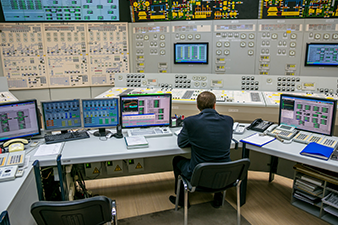




The 80-Year Challenge in Nuclear Operations
Why Modernize? Evolving Workforce and Technology
Digital Transformation Opportunities for the Nuclear Workforce
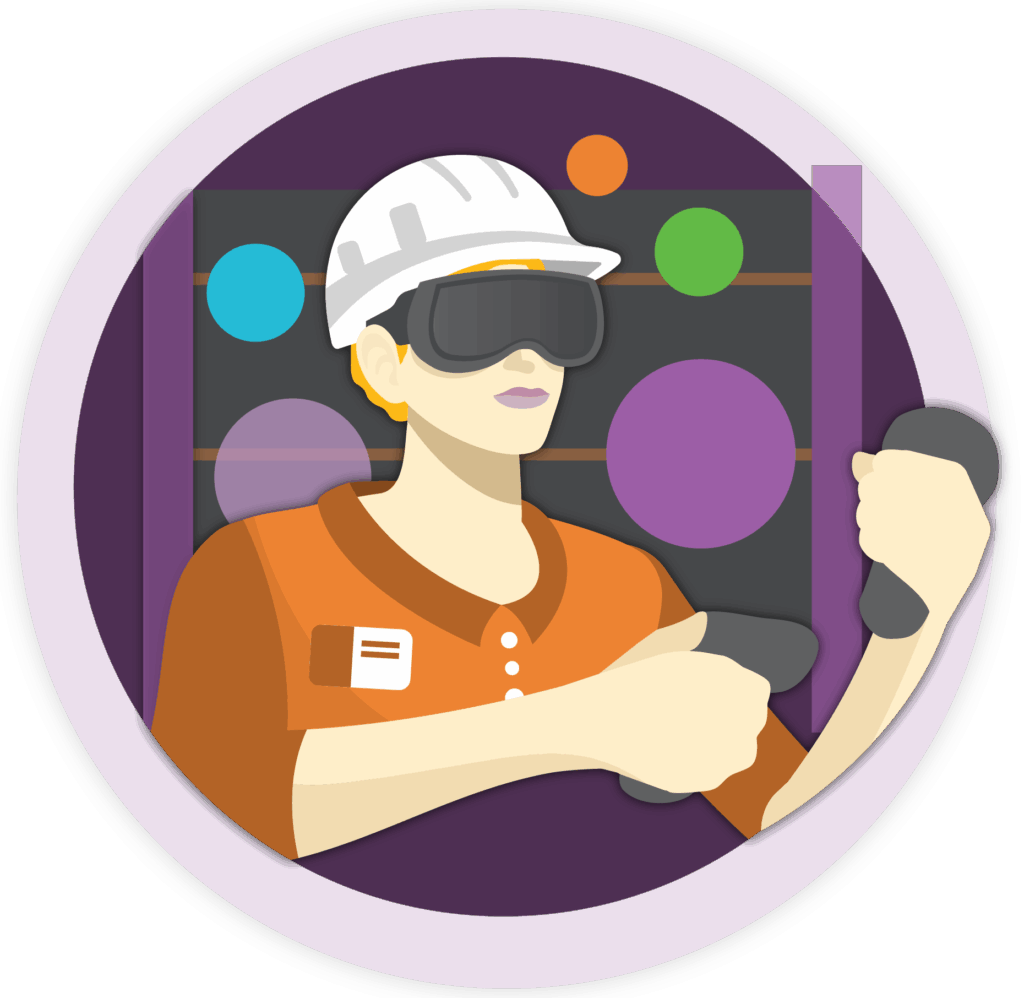
What Does An Immersive Virtual Reality Training Environment For Nuclear Plant Operators Offer?

Learning the Layout of a Plant
Comprehension of How Parts Function Risk-Free

Acceleration of Staff Proficiency

Cost-Effective, Hands-On Experience
What Does An Immersive Virtual Reality Training Environment For Nuclear Plant Operators Offer?
Learning the Layout of a Plant
Comprehension of How Parts Function Risk-Free
Acceleration of Staff Proficiency
Cost-Effective, Hands-On Experience
Modern tools are already proving their value in nuclear training and work processes. Immersive simulation and e-learning can dramatically speed up learning cycles. Researchers demonstrated that updating an INPO-accredited course with digital content could cut delivery time by a factor of 8 to 1, for instance, turning an 8-hour classroom course into roughly 1 hour of interactive computer-based training. In practice, one nuclear operator deployed microlearning and video-based scenario training reduced certain course durations six-fold while improving comprehension and saved more than 2,000 contractor hours per refueling outage through on-demand learning modules. These results suggest that time-to-proficiency can be slashed without sacrificing quality by leveraging modern learning design.
Another major opportunity is harnessing AI and knowledge management tools to capture and disseminate expertise. For example, a large nuclear operator built internal “digital innovator” cohorts to upskill engineers in data science and AI; their first teams delivered an AI-driven preventive maintenance toolkit and a reactor engineering dashboard. This approach not only created useful applications but also seeded a culture of continuous learning and rapid knowledge transfer among staff. Elsewhere, an operating plant implemented an AI-based document search assistant to help workers instantly query procedures, engineering documents, and operating experience. The result was a 40% reduction in time spent retrieving information for tasks like troubleshooting and pre-job briefs. These examples show how intelligent systems can act as force-multipliers for the workforce, giving employees faster access to the right information and guiding them through complex tasks.
Digital infrastructure upgrades are a foundational piece of this transformation. Secure cloud or on-premise data platforms, robust wireless networks in plants, and integration of field devices (e.g., smart dynamic procedures, AR-enabled digital twins) are all enabling what DOE’s researchers term Integrated Operations for Nuclear (ION)—a shift from labor-centric to data-centric work models. Under ION, work-reduction opportunities like remote assistance and automated troubleshooting have high probability of positive outcomes. Imagine an experienced technician remotely guiding onsite staff via augmented reality or AI systems pre-analyzing alarm trends to support operator decisions. These technologies augment human capabilities, allowing fewer people to more effectively manage plant operations. Notably, none of these innovations diminish the role of the human; rather, they relieve workers of repetitive tasks and cognitive burdens, focusing their expertise where it truly adds value (such as problem-solving and decision-making).
Recommendations for Building an Agile Nuclear Workforce
- Evolve Training Accreditation in Collaboration with INPO: Work with INPO and industry bodies to update the accredited training model for agility. This means incorporating blended learning, simulators, and continuous e-learning into the systematic approach to training without compromising rigor. By jointly developing new guidelines (e.g., for digital content certification and AI-driven training aids), the industry can modernize training programs in a safe, accredited framework rather than in isolation.
- Invest in Immersive Learning and Microlearning: Make targeted investments in digital training infrastructure—from full-scope virtual reality simulators to mobile learning platforms. These tools should be rolled out in high-value areas like operator training, maintenance, and outage preparation. Start with pilots to demonstrate results (as some operators have done with virtual control room sims and video-based lessons) and then scale successful methods fleetwide. The goal is to accelerate time-to-qualification for new hires and simplify requalification without sacrificing quality, reducing classroom time and allowing more frequent refresher training on demand.
- Deploy AI Assistants for Knowledge and Compliance: Implement AI-driven “copilot” systems to support the workforce in real time. For example, natural-language search tools can instantly retrieve procedure steps or design data, ensuring workers have the latest information at their fingertips. Intelligent digital procedure systems can guide staff through complex evolutions, providing prompts or checks for each step to enhance procedural compliance. Similarly, AI can flag early warning signs in logs and documents (as pilots in the industry are already doing), effectively turning data into actionable insights for frontline employees.
- Upskill and Empower the Current Workforce: Modernization must include people development programs. Establish “digital workforce” initiatives such as peer-led AI training working groups, hackathons for plant staff to experiment with new tech, and recognition for employees who pioneer new digital or innovative practices. By empowering existing workers to become versed in data tools and AI (through hands-on projects and training), nuclear operators create internal champions who drive adoption from within. This approach also helps ease fears and builds a culture of innovation at the sites.
- Align Modernization with Workforce Development: Addressing nuclear workforce shortages means engaging talent well before they enter the job market. Nuclear operators should integrate modernization efforts with proactive outreach—partnering with schools, technical programs, and universities to shape curricula, provide scholarships and internships, and promote careers through employee ambassadors. Targeted skill development in critical nuclear disciplines—such as operational technology instrumentation and control, drones and robotics, and advanced engineering—can build a steady pipeline of professionals equipped for the industry’s increasingly digital, data-driven future.
- Leverage Industry Partnerships and Pilots: No nuclear operator should tackle this alone. Engage in collaborative pilots with DOE national labs (e.g., the LWRS Program’s Integrated Operations pilot studies) to test new technologies in real plant environments. Share lessons learned through EPRI, NEI, and industry forums so that successes can be replicated across the sector. Federal policymakers can support these efforts by funding demonstration projects and streamlining regulatory acceptance for proven digital tools (for instance, NRC approving the use of virtual simulations for certain training credits). A coordinated effort will reduce costs and risks for each player and speed up industry-wide progress.
Conclusion: A Call to Action
The nuclear industry stands at a pivotal moment. To operate safely and efficiently through 60, 80 years and beyond, we must boldly adapt our workforce strategies. This is an urgent but constructive call; much like our approach to safety, we need a proactive stance on workforce modernization. By investing in digital infrastructure, intelligent training systems, and workforce upskilling, nuclear operators can preserve the knowledge of the past and empower the next generation. Crucially, these innovations should reinforce our core principles—a strong nuclear safety culture, a questioning attitude at all levels, and excellence of human performance. Technology must complement, not supplant, these human values, for example, using AI to double-check procedural steps or encourage critical thinking rather than blindly automating decisions.
The path forward requires coordinated industry action. Nuclear operators, federal agencies, INPO, and national labs each have a role to play. Executives should champion this vision, regulators should accommodate and guide it, and organizations like INPO and EPRI should help standardize and disseminate best practices. If we move together with purpose, we can significantly shorten time-to-proficiency, improve knowledge transfer, and enhance operational resilience, all while upholding the nuclear industry’s unparalleled standards of safety and reliability. The reward is a sustainable, agile workforce ready to carry our nuclear plants into their extended future—a future where nuclear energy continues to thrive as a cornerstone of clean, reliable power. Let’s get to work on building that workforce today.
- World Nuclear News – “Second US plant licensed for 80-year operation” (March 2022)
- INL Report – ION Business Operation Model Analysis and Industry Validation (Aug 2022)
- DOE LWRS Program – ION: A Strategic Approach Addressing Workforce Attraction and Knowledge Retention (Aug 2024)
- DOE LWRS Program – ION: Work Reduction Opportunity Demonstration (Aug 2024)
- ScottMadden – Training and Safety Investment Strategy (Aug 2025)
- ScottMadden – Nuclear AI Roundtable Meeting Notes (Jul 2025)
- World Nuclear News – “Virtual reality used to train nuclear staff” (Dec 2021)