



But how does ScottMadden approach ECR? Let’s delve deeper.
Understanding Enterprise Cost Reduction
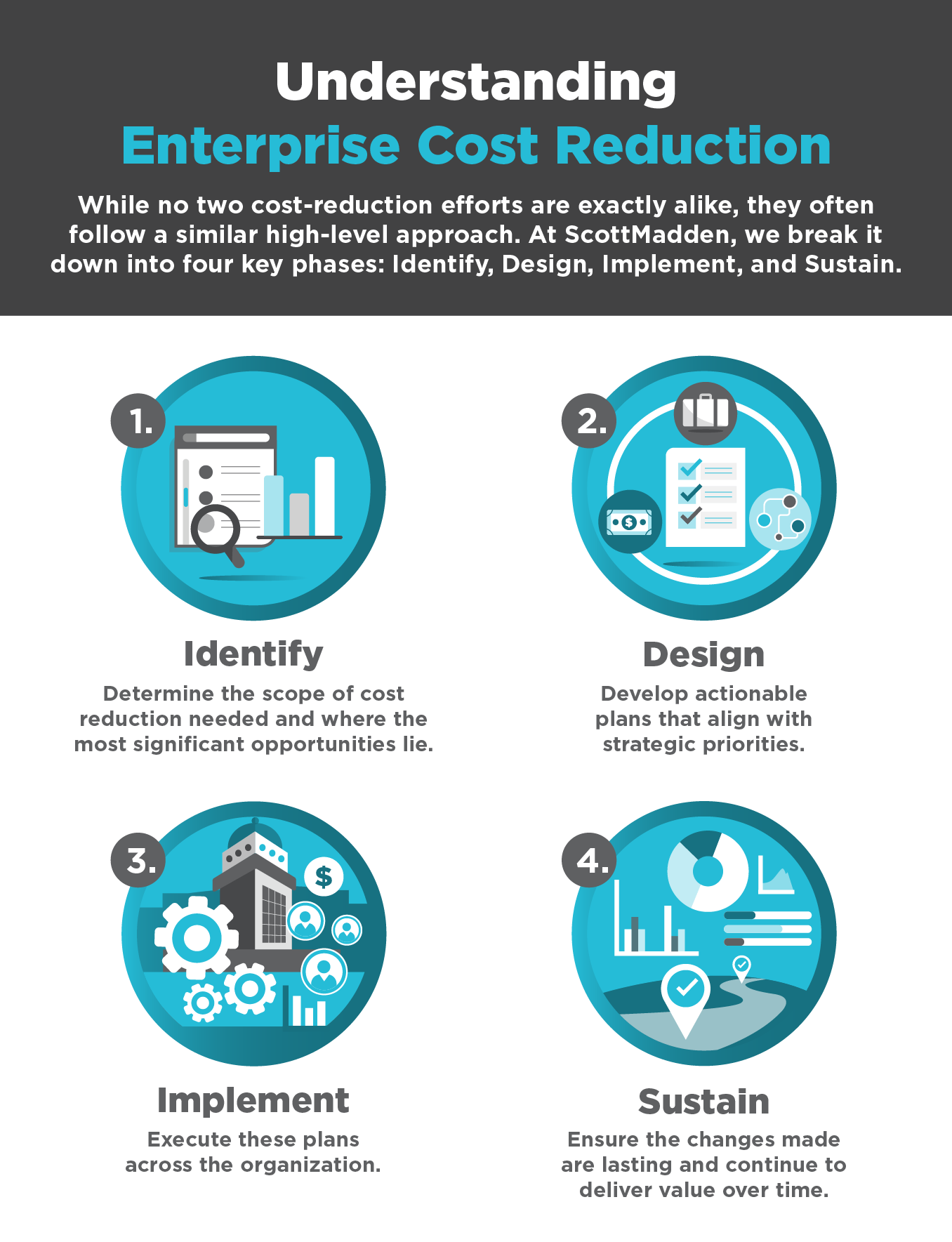
While no two enterprise cost reduction (ECR) efforts are exactly alike, they often follow a similar high-level approach, including assessments of cost-reduction opportunities. At ScottMadden, we break it down into four key phases: identify, design, implement, and sustain.
Phase 1 – Identify: Cost Reduction Opportunity Assessment
- Functional Benchmarking:Compare your organization with industry leaders to identify process changes needed to align with best-in-class performers, gaining insights into enterprise efficiency standards and best practices that can help reduce enterprise costs and improve overall performance.
- Performance Benchmarking: Set goals based on performance metrics that can be externally benchmarked.
- Internal Divisional Benchmarking:Compare the financial performance of different departments or geographic regions within the organization to identify opportunities to reduce enterprise costs. This benchmarking forms the analytical core of a cost reduction opportunity assessment.
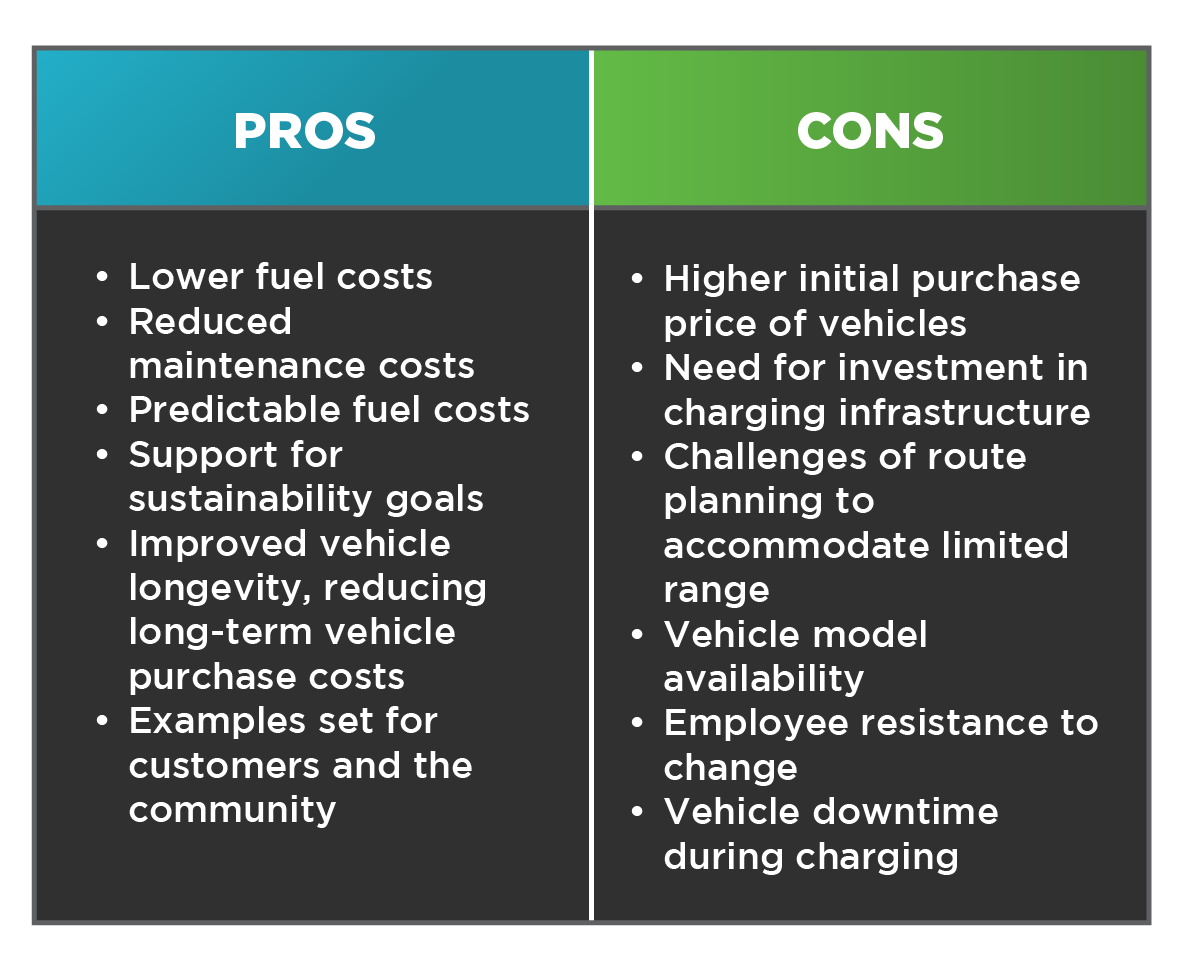
For example, take a decision to electrify a company’s fleet of vehicles. ScottMadden would facilitate strategic sessions with leadership to assess the pros and cons of the decision and simulate how the transition to electric vehicles could impact the company’s operations. Through this, the leaders can determine if the savings sufficiently outweigh the tangible and intangible costs of the decision.
Whatever the approach, it’s vital to establish clear guiding principles, define what is in and out of scope, and identify the “third rail” or areas that should remain untouched.
By the end of the identify phase, you should have a clear cost-reduction target, a memorable theme or method for communicating it to employees, and strong alignment and buy-in from senior leaders in the business.
Phase 2 – Design: Developing the Roadmap
Phase 3 – Implement and Sustain: Making Initiatives Stick
The implementation phase is only as effective as your ability to execute the improvements you designed. If you complete the design phase properly and include a thorough cost-reduction opportunity assessment, you should have specific, actionable initiatives ready to launch. However, launching is just the beginning. Ensuring follow-through on actions and results is crucial, as implementation can take months or even years.
Questions to answer when changing a cost-reduction initiative:
- Does this proposed change still align with the original goals of the cost-reduction initiative? How does it impact our long-term strategy compared to the current plan?
- What has changed in the internal or external environment that justifies revisiting this initiative? Do we have data to support this?
- What are the additional costs (financial, operational, or reputational) of making this change? Are we prepared to address any negative perceptions or resistance to our approach?
- If we redirect resources, what other opportunities may be impacted?
Conclusion: A Strategic Approach to Enterprise Cost Reduction
ECR requires balancing macro and micro perspectives. Understanding the big picture-the benefits of a strategy, the risks being mitigated, and the market opportunities-is crucial. However, the small details must be understood and addressed to implement change. By examining these details, questioning their relevance, and understanding them from the perspective of those directly affected, you can uncover opportunities that bring you closer to your goals.
When enterprise cost reduction is done right—with absolute commitment and follow-through—the results can be dramatic. However, there’s another benefit: strong execution fosters a culture of accountability, where people genuinely feel invested in the organization’s success. We’ve seen ECR actually improve company culture, and that’s a transformation we’re always excited to help teams achieve.
Ready to Get Started?
If you’re looking to start meaningfully reducing enterprise costs in your organization, reach out to us today. Let’s start the conversation and explore how we can help you navigate this transformative journey.