

Introduction
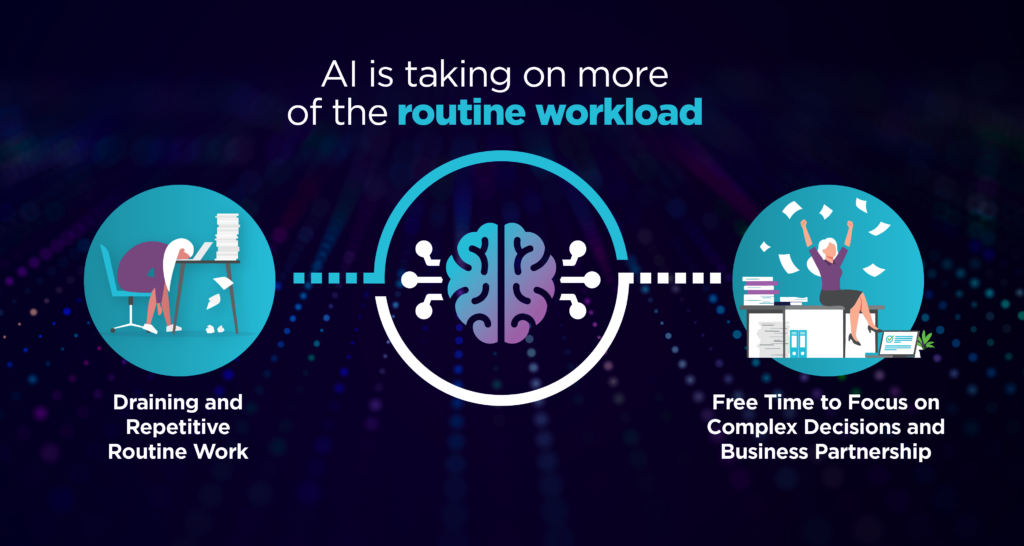
This article, the first in a four-part series, explores how the service delivery model is evolving. We examine what AI means for the Tiers 0–3 structure, how automation is redistributing work, and what new opportunities this creates for shared services organizations to elevate their strategic impact.
The Evolution of Service Delivery with AI
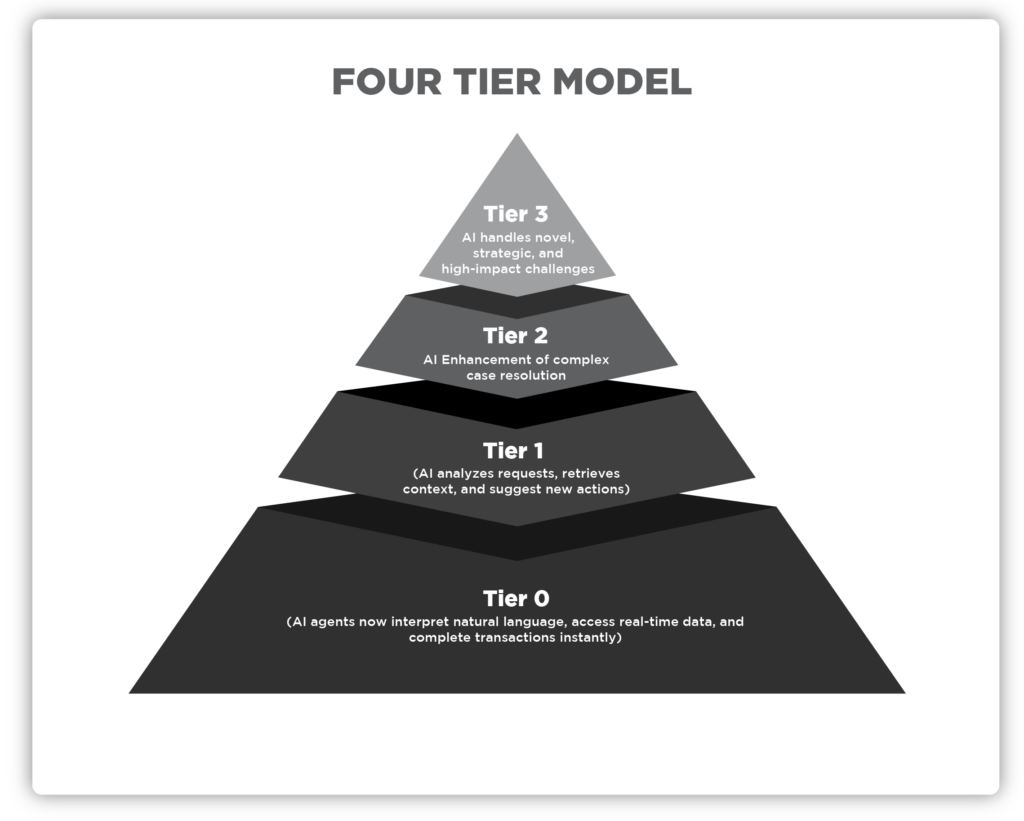
Tier 0: Intelligent Self-Service
The effect is a step-change in both scale and experience: around-the-clock responsiveness, consistent accuracy, and a dramatic reduction in Tier 1 volumes. As AI becomes the primary point of contact, organizations must rethink how they govern information, manage service capacity, and design escalation paths to prevent by keeping humans involved in judging exceptions and letting AI learn but not lead without oversight. The top three risks of over-automation are loss of human judgment in complex or nuanced situations, compliance and quality errors from unchecked AI actions, and poor user experience when people can’t easily reach a human for exceptions or support.
Tier 1: AI-Augmented Frontline Support
Human Tier 1 agents focus on cases that require empathy, negotiation, or nuanced problem-solving. They rely on AI tools that surface insights instantly, allowing faster, more informed responses. This hybrid model is giving rise to the concept of the universal agent—professionals supported by AI to handle cross-functional inquiries without deep specialization, improving both flexibility and service quality.
Tier 2: Specialists with AI Assistance
Tier 3: Expert and Development Support
A New Balance of Human and Machine Work
Functional Implications of AI Across Shared Services
| Function | Tier 0: Intelligent Self-Service | Tier 1: AI-Augmented Frontline Support | Tier 2: Specialist Work with AI Assistance | Tier 3: Expert and COE Focus |
|---|---|---|---|---|
| Human Resources | 24/7 policy Q&A, benefits guidance, onboarding checklists, and leave management via HR virtual agents; embedded copilots in HCM platforms (Workday, SAP SuccessFactors). | AI supports case intake, routing, and summarization; agent assist tools enable resolution of standard HR cases end-to-end within HR service platforms. | AI pre-builds case files, compiles documentation, and identifies historical patterns for complex disputes or accommodations. | COE teams focus on policy design, ethics, and governance, including oversight of AI models handling employee data. |
| Finance & Accounting | Vendor onboarding, invoice status, and expense policy guidance via AI assistants and embedded finance copilots. | Automated invoice capture, three-way match, and coding recommendations; AI-enabled cash application across banks and portals. | AI performs exception pre-analysis (price or quantity variances, unusual deductions) and drafts flux analysis for month-end close. | COEs oversee control frameworks, segregation of duties, model risk reviews, and orchestration of automated close processes. |
| Information Technology | Conversational bots handle password resets, account unlocks, device requests, and knowledge queries; voice agents deflect common service desk calls. | AI-driven routing, ticket enrichment, and swarming models reduce handoffs; AIOps supports early issue detection and automated remediation. | Specialists address deeper application or platform issues using anomaly detection, predictive diagnostics, and guided runbooks. | Expert teams focus on platform engineering, reliability, and AI governance, defining standards for self-healing systems. |
| Supply Chain | AI provides real-time order tracking, delivery status, and proactive shipment updates via chat or voice; predictive alerts for exceptions. | Virtual agents assist with supplier claims, returns, and purchase requisition validation; automated PO processing. | AI supports exception management across planning and fulfillment, detecting shortages and cash flow risks. | COEs focus on network optimization, simulation modeling, and supplier risk governance; AI copilots embedded in planning tools. |
Toggle each shared services function below to see how it is evolving
Human Resources
24/7 policy Q&A, benefits guidance, onboarding checklists, and leave management via HR virtual agents: embedded copilots in HCM platforms (Workday, SAP SuccessFactors).
Tier 1: AI-Augmented Frontline Support
AI supports case intake, routing, and summarization; agent assist tools enable resolution of standard HR cases end-to-end within HR service platforms.
Tier 2: Specialist Work with AI Assistance
AI pre-builds case files, compiles documentation and identifies historical patterns for complex disputes or accommodations.
Tier 3: Expert and COE Focus
COE teams focus on policy design, ethics, and governance, including oversight of AI models handling employee data.
Finance & Accounting
Vendor onboarding, invoice status, and expense policy guidance via AI assistants and embedded finance copilots.
Tier 1: AI-Augmented Frontline Support
Automated invoice capture, three-way match, and coding recommendations; AI-enabled cash application across banks and portals.
Tier 2: Specialist Work with AI Assistance
AI performs exception pre-analysis (price or quantity variances, unusual deductions) and drafts flux analysis for month-end close.
Tier 3: Expert and COE Focus
COEs oversee control frameworks, segregation of duties, model risk reviews, and orchestration of automated close processes.
Information Technology
Conversational bots handle password resets, accounts unlocks, device requests, and knowledge queries; voice agents deflect common service desk calls.
Tier 1: AI-Augmented Frontline Support
AI-driven routing, ticket enrichment, and swarming models reduce handoffs; AIOps supports early issue detection and automated remediation.
Tier 2: Specialist Work with AI Assistance
Specialists address deeper application or platform issues using anomaly detection, predictive diagnostics, and guided runbooks.
Tier 3: Expert and COE Focus
Expert teams focus on platform engineering, reliability, and AI governance, defining standards for self-healing.
Supply Chain
AI provides real-time order tracking, delivery status, and proactive shipment updates via chat or voice; predictive alerts for exceptions.
Tier 1: AI-Augmented Frontline Support
Virtual agents assist with supplier claims, returns, and purchase requisition validation; automated PO processing.
Tier 2: Specialist Work with AI Assistance
AI supports exception management across planning and fulfillment, detecting shortages and cash flow risks.
Tier 3: Expert and COE Focus
COEs focus on network optimization, simulation modeling, and supplier risk governance; AI copilots embedded in planning tools.
The Emerging Pattern
The Future of AI-Enabled Service Delivery
The organizations that move fastest are those that treat AI not as a point solution but as an operating model shift. Successfully implementing AI will require more than deploying chatbots or copilots—it means redesigning workflows, governing data differently, and rethinking how people contribute value. Human roles won’t vanish; they’ll rise in importance as judgment, empathy, and creativity become the defining features of high-value work.
In this transformation, shared services can move beyond efficiency to shape enterprise strategy. With AI managing routine execution, service organizations have the bandwidth and intelligence to anticipate needs, influence business outcomes, and drive continuous improvement across functions.
How We Can Help

Identifying the right opportunities
Redesigning the operating model

Planning for change