

Since 2006, the Center for Energy Workforce Development (CEWD) has conducted bi-annual surveys to explore trends in the energy workforce and support companies in the industry with strategic workforce planning initiatives. Previous survey cycles highlighted an aging workforce and the impacts of potential retirements as key concerns for workforce development planning programs.
However, when CEWD partnered with ScottMadden to conduct the 10th survey in 2023, results indicated the utility sector had largely replenished the aging workforce in terms of numbers. While this concern has been alleviated, new challenges have emerged. Survey results showed that more than 50% of the current utility workforce has less than 10 years of experience. Furthermore, the survey suggests a new trend of much higher non-retirement attrition, indicating that employees are changing jobs more frequently than ever before.
These developments could not have come at a more challenging time for utilities as they grapple with unprecedented load growth, large capital expenditure plans, and rapid implementation of emerging technologies. While there is no silver bullet to solve these issues, leveraging an end-to-end workforce planning and development framework can help organizations:
- Align business strategies and talent programs
- Prioritize talent investments to maximize ROI
- Improve employee engagement and retention
- Develop leadership capabilities and allow for intentional workforce management
- Anticipate changes in workforce needs and prepare for future shifts in the marketplace
Integrating Workforce Development Planning
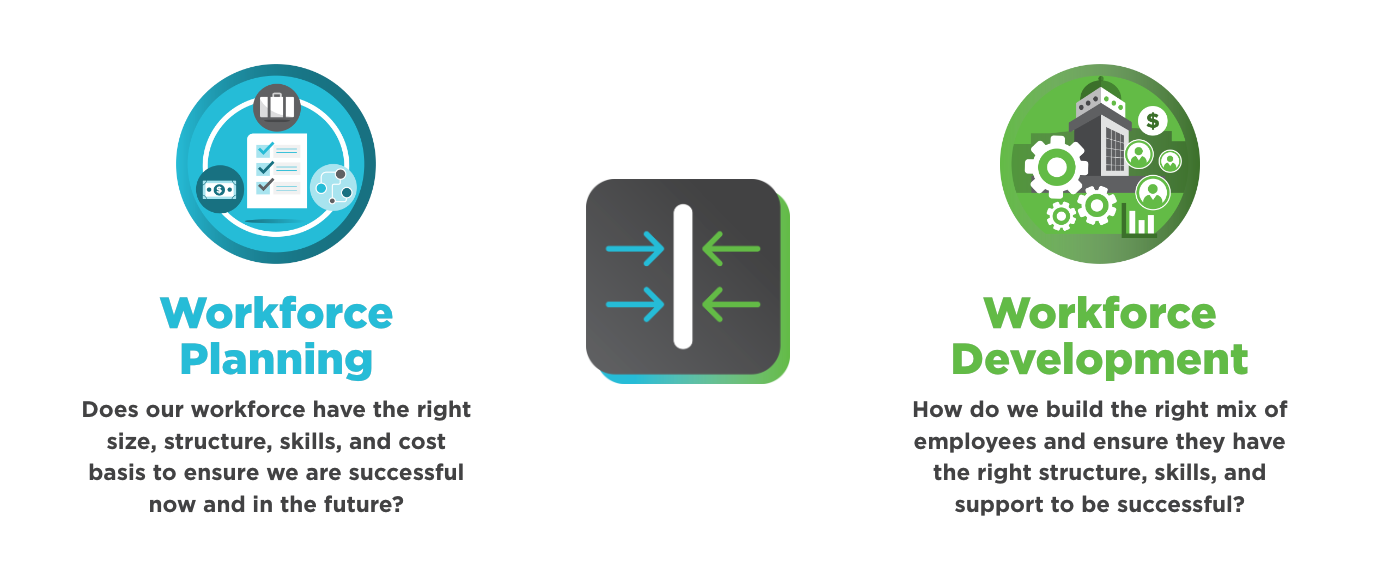
Workforce planning and workforce development are not new concepts for utilities, but what each body of work entails varies by utility. For example, some organizations simply define workforce development as training, while others have established a broader view that includes training, career mobility, and community engagement. Regardless of the definitions, ScottMadden sees most organizations carry out workforce planning and development in a siloed fashion, which frequently leads to misaligned business and people strategies, a disjointed employee experience, and lackluster returns on investment. When executed as a comprehensive and integrated framework, workforce planning and development ensures a seamless connection between what the organization needs to succeed both now and in the future.
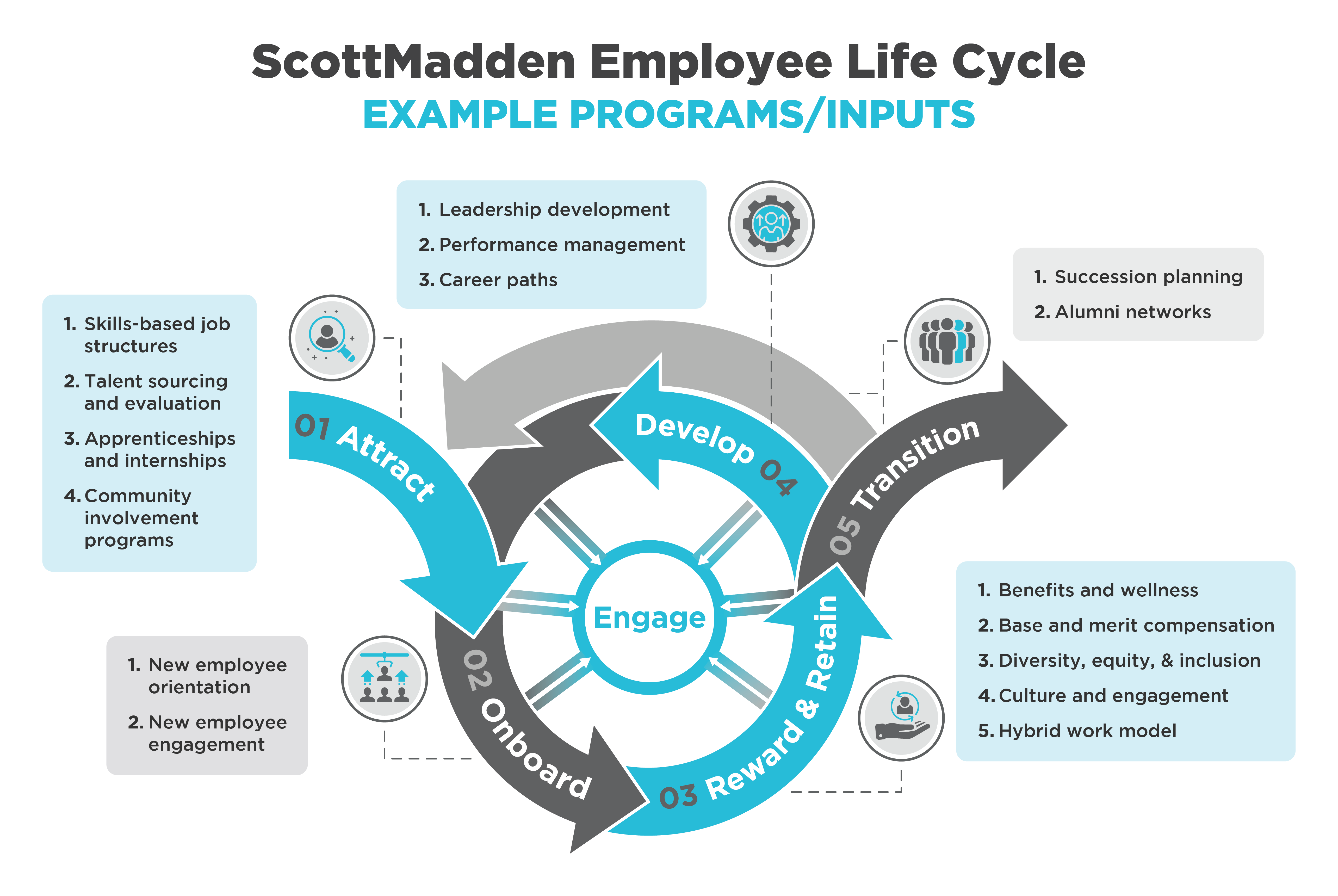
As mentioned above, workforce development can take on many forms and definitions. When identifying, prioritizing, and connecting workforce development initiatives, ScottMadden recommends viewing them through the lens of the employee lifecycle. This approach ensures the employee experience remains front and center as the business and HR move through the workforce development planning process.
Executing Workforce Development Planning
A key challenge in integrated workforce development planning is governing the end-to-end program. Executive leadership, business unit leadership, and HR all have roles to play throughout the process, and coordination is critical to ultimately align business strategies and talent programs. ScottMadden often sees a gap between the business and HR in terms of expectations, priorities, and processes. Ideally, HR provides guidance, processes, and tools that enable collaboration with business unit leaders to identify and solve workforce needs. Bridging the gap between the business and HR is often a necessary starting point on the workforce planning and development journey.
Once the organization has laid the collaborative foundation between the business and HR, there are three key steps to effectively execute strategic workforce planning and development:
- Understand business strategies and impacts by gathering stakeholder input on current challenges and future needs, identifying internal and external factors that could affect these needs, and developing a future-state, strategy-driven workforce profile.
- Assess resource quantity and skill requirements by leveraging a strategic workforce planning model to forecast the required workforce size, identifying skill gaps based on a functional inventory of existing capabilities, and developing an “acquire vs. build” philosophy for critical resource gaps.
- Develop and prioritize talent strategies based on impact and cost, establish an implementation roadmap to close the identified gaps, develop success measures, and maintain ongoing initiative review plans.
Implications and Takeaways
The energy industry is changing rapidly, and organizations will need to evolve to meet this moment. Whether implementing new data capabilities to manage the proliferation of communicating SCADA devices at the grid edge, scaling up transmission resources to interconnect more dispersed utility-scale renewable assets, or upskilling back-office and field functions to maximize the effectiveness of various IT/OT investments, effective utility workforce management will be critical.
Organizations that have successfully implemented a comprehensive, integrated workforce planning and management process will be better positioned to respond to evolving challenges in recruiting, retaining, and developing the right skills and talent for their businesses. Workforce development planning is not a one-time process-it should be regularly revisited, particularly for the utility industry that is evolving more rapidly than ever with new workforce composition and skill requirements.