


Introduction
Most organizations fall into the same trap: they wait for perfect data, perfect governance, and perfect conditions before they begin. Meanwhile, 18 months go by, and the opportunity window closes.
Adaptive innovation works differently. We help you to begin experimenting within weeks while simultaneously laying the foundations. Not in sequence. Not someday. Right now.
The result: working prototypes in 2 to 4 weeks, production solutions in 12 to 16 weeks, and an innovation capability that outlasts any consulting engagement.
What is AIMS?
AIMS (Adaptive Innovation Management System) is an enterprise operating model designed to manage innovation as a sustained organizational capability, not just a one-time project. It provides the methodology, governance, and portfolio discipline needed to advance AI and emerging tech initiatives from experimentation to deployment with both speed and control.
Most organizations understand their innovation goals, but they lack a consistent process to reach them. AIMS provides that process.
Three Core Principles
Evolution-Aware
A discovery experiment requires freedom to learn quickly and fail inexpensively. The same solution transitioning to production demands architectural discipline and operational rigor. What helps an initiative succeed in one stage can hinder it in another.
This isn’t optional or negotiable; it’s how innovation truly functions. AIMS aligns your management style with the maturity stage, ensuring you’re not stifling experiments with excessive governance or allowing production systems to operate without adequate controls.
Portfolio-Based
Some discovery experiments will fail. That’s both expected and valuable, enabling you to learn what doesn’t work without wasting production-scale investment. Demanding that every experiment justify standalone ROI guarantees you’ll only fund safe, incremental ideas.
Portfolio thinking involves managing a diverse mix: multiple discovery experiments, several productization initiatives, and a few industrialization operations running simultaneously. You handle risk across the entire portfolio, not on a project-by-project basis.
Context-Sensitive
Imitating Amazon’s innovation strategy in a regulated company usually fails. Fast-paced companies require different speeds than heavy manufacturing. Highly innovative organizations can handle more complexity than those just starting out.
AIMS is based on principles (evolution-aware, portfolio-based) but adapts its application to your operations. It is built from the same framework but implemented differently, depending on your location and specific challenges.
The Three-Stage Innovation Model
Discovery
Learn fast, fail cheap
WHAT HAPPENS
Small experiments testing hypotheses with minimal investment
TIMELINE
2–12 weeks
MANAGEMENT STYLE
Maximum freedom, rapid iteration
GOVERNANCE
Lightweight approval focused on learning
SUCCESS METRIC
Validated value + speed of learning
Productization
Scale what works
WHAT HAPPENS
Taking proven concepts to broader deployment
TIMELINE
3–6 months
MANAGEMENT STYLE
Remove organizational barriers, facilitate adoption
GOVERNANCE
Architectural review, security approval
SUCCESS METRIC
Adoption rate + measured business impact
Industrialization
Optimize and sustain
WHAT HAPPENS
Enterprise-scale operations delivering ongoing value
TIMELINE
Continuous operations
MANAGEMENT STYLE
Operational excellence, efficiency focus
GOVERNANCE
Full compliance and controls
SUCCESS METRIC
Cost efficiency + sustained value delivery
The Parallel Path Approach
- Perfect conditions never arrive
- You don’t know what foundation you need until you start experimenting
- Competitors are learning while you’re planning
- Business cases built on assumptions collapse when reality hits
AIMS runs both tracks simultaneously. You immediately begin discovery experiments using current data or, when necessary, synthetic options. At the same time, you develop the essential foundations for production deployment, focusing only on what you need based on what you’re learning, not what you might need in the future.
This solves the innovation paradox. You don’t have to choose between speed and governance. Instead, you get both by using them at the right time in the right way.
The AIMS Difference
AIMS starts where you are, applies stage-appropriate governance that evolves as initiatives mature, and manages innovation as a balanced portfolio where intelligent failures create valuable learning.
Result: 75% faster time to production, 3–5x ROI, and innovation capability that sustains beyond any consulting engagement.
How AIMS Works
Stage-Appropriate Management
The Continuous Portfolio Cycle
This cycle never stops. Mature innovation organizations constantly identify new opportunities based on emerging needs, run multiple discovery experiments to test hypotheses cheaply, scale successful experiments through productization, optimize production systems during industrialization, and gather insights that inform the next wave.
The key is to simultaneously manage all stages, rather than to sequentially work through them.
Portfolio Composition Evolution
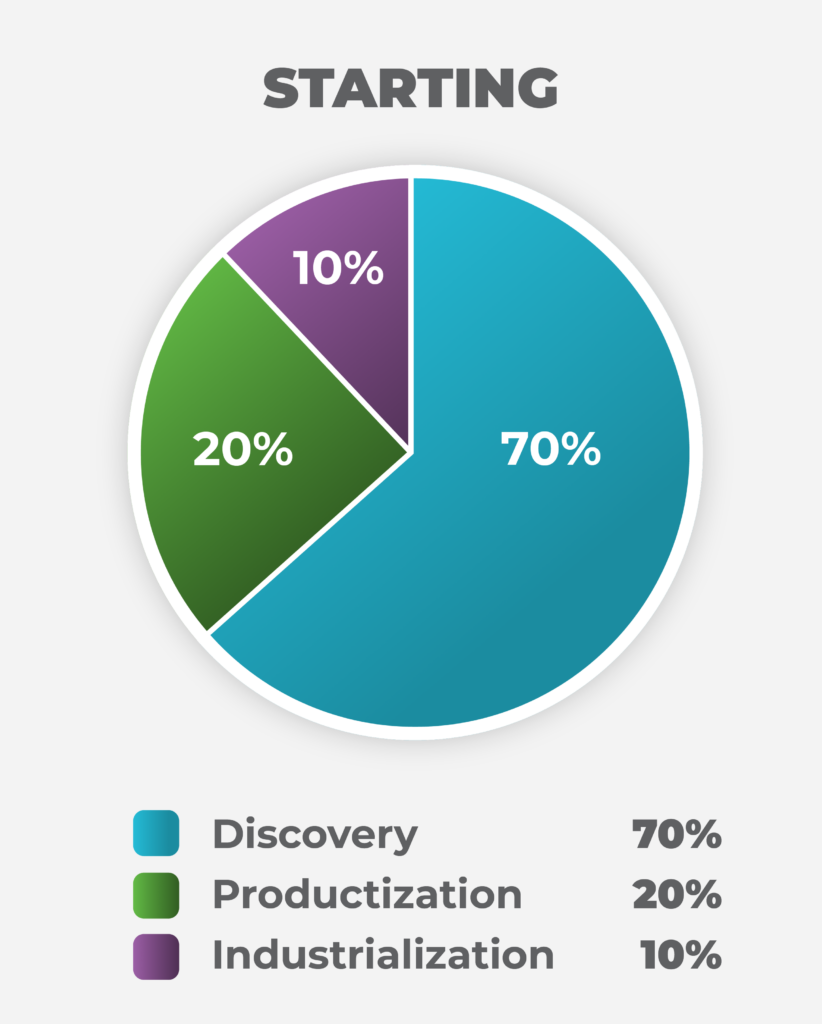
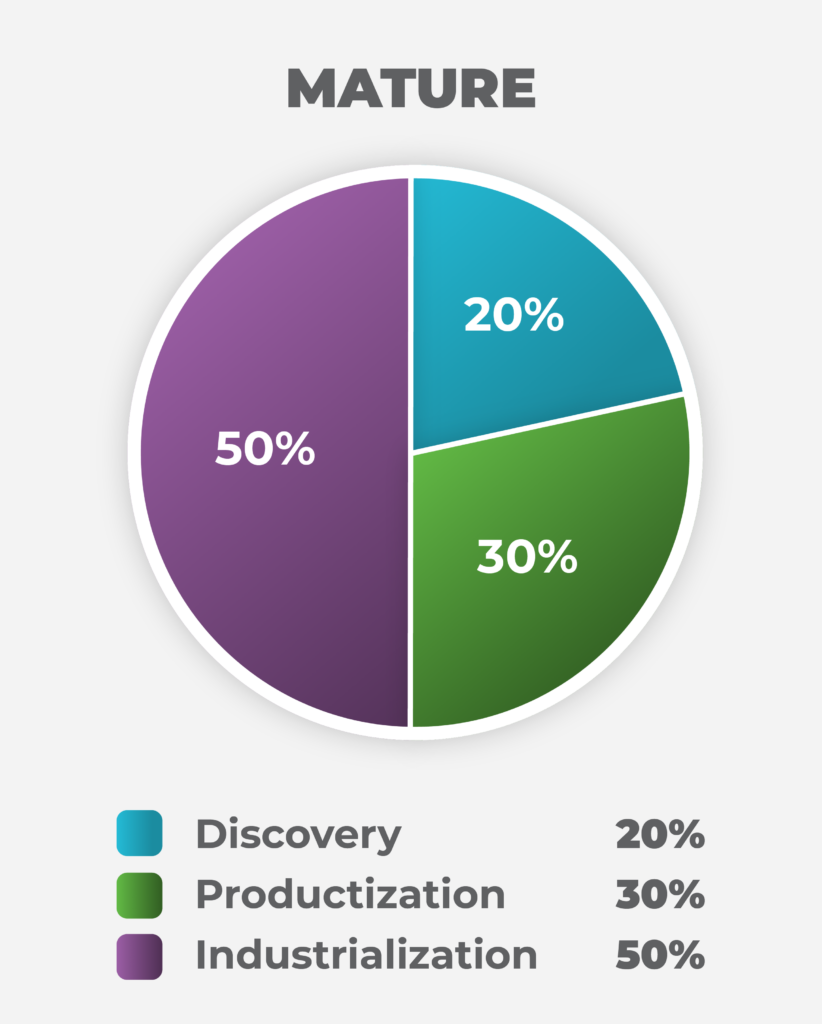
Organizations that rely entirely on discovery never realize value. Those that skip discovery and go directly into “execution mode” risk losing their ability to innovate, and they eventually stagnate.
Why Portfolio Balance Matters
AIMS offers the framework and metrics to intentionally manage this balance, rather than letting it happen by accident.
The Innovation Challenge

The Customer Engagement Journey

Services & Solutions

Why It Works
Three Critical Lessons
Start Where You Are
We worked with a client whose IT team insisted they needed 12 months of data remediation before starting any AI pilots. We conducted three discovery experiments using existing data and demonstrated value within eight weeks. That evidence justified the data quality investment, and we knew exactly which data domains actually mattered.
Readiness isn’t something you wait for. It’s something you build through doing.
Value Before Foundation
The traditional sequence of “build perfect foundations then innovate” often fails because you don’t know what foundation you need until you start experimenting. You end up building infrastructure for use cases that never materialize while neglecting capabilities that matter.
The AIMS sequence of “start experimenting, identify real foundation needs, invest based on demonstrated value” ensures every infrastructure dollar supports proven business value rather than theoretical requirements.
Portfolio Thinking Wins
One client evaluated eight discovery experiments over six months. Three proved valuable and advanced. Two showed no value and got killed. Three generated important learning about what doesn’t work in their environment.
Traditional thinking: 37.5% success rate indicates failure. Portfolio thinking: Generated validated results with a small total investment, learned what to avoid in future experiments, and built organizational innovation capability. Clear win.
What Results Look Like
Speed
- 75% reduction in concept-to-production time (18 months → 12–16 weeks)
- Working prototypes in two weeks vs. six-month requirements processes
- Fast learning cycles enable testing more hypotheses with less waste
Value
- 3–5x ROI within 18 months (typical portfolio performance)
- 70–80% of discovery experiments validate business value
- 60–70% of productization pilots reach production
Capability
- Client teams independently executing by months 6–12
- 90% reduction in consultant dependency by month 12
- Innovation capability sustained two+ years post-engagement