Operating and maintaining a solar + storage asset requires a variety of activities that should be factored into operations and maintenance (O&M) budgets and program design.
Below is a summary of typical solar + solar O&M activities as well as some key considerations.
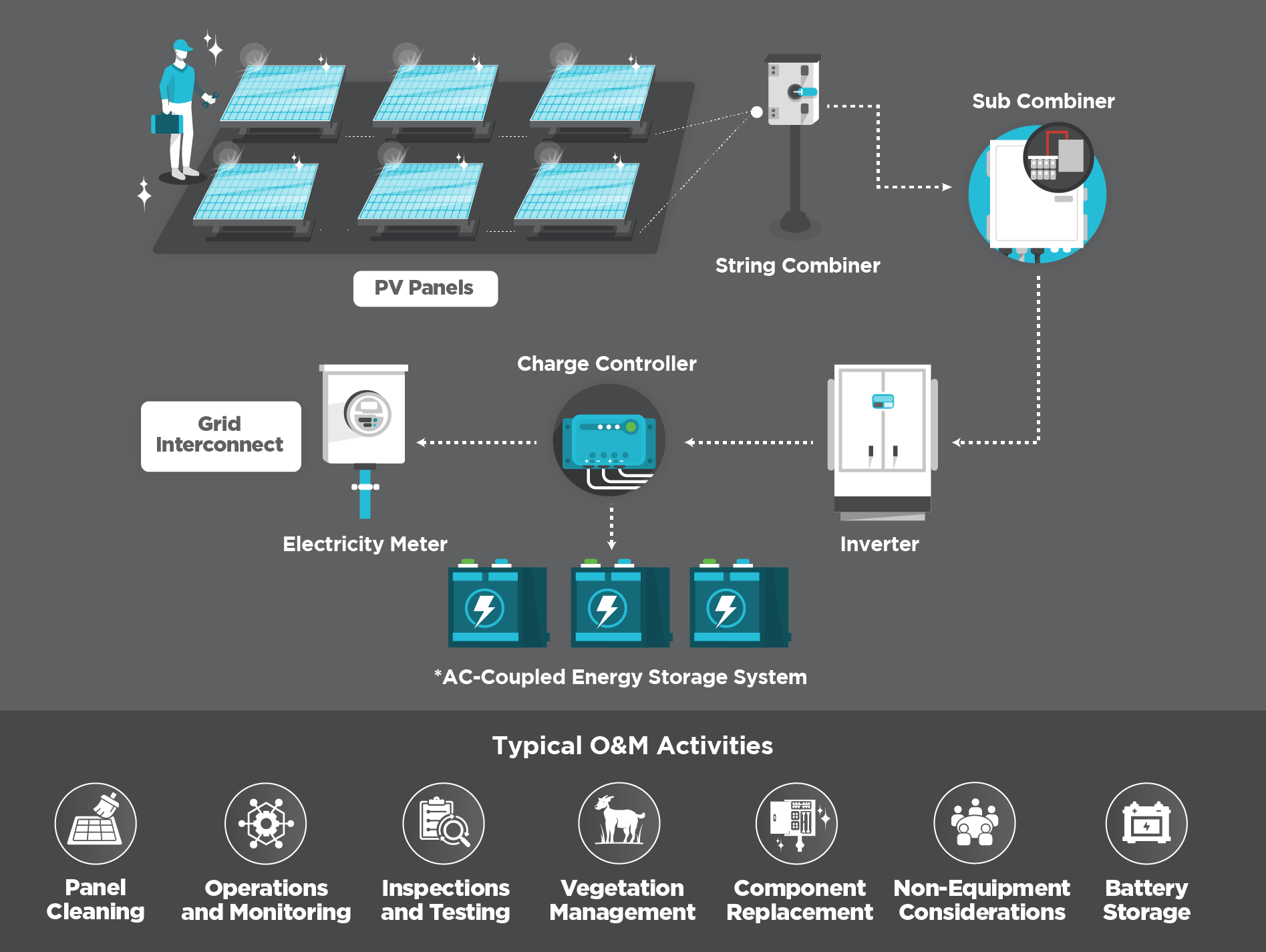
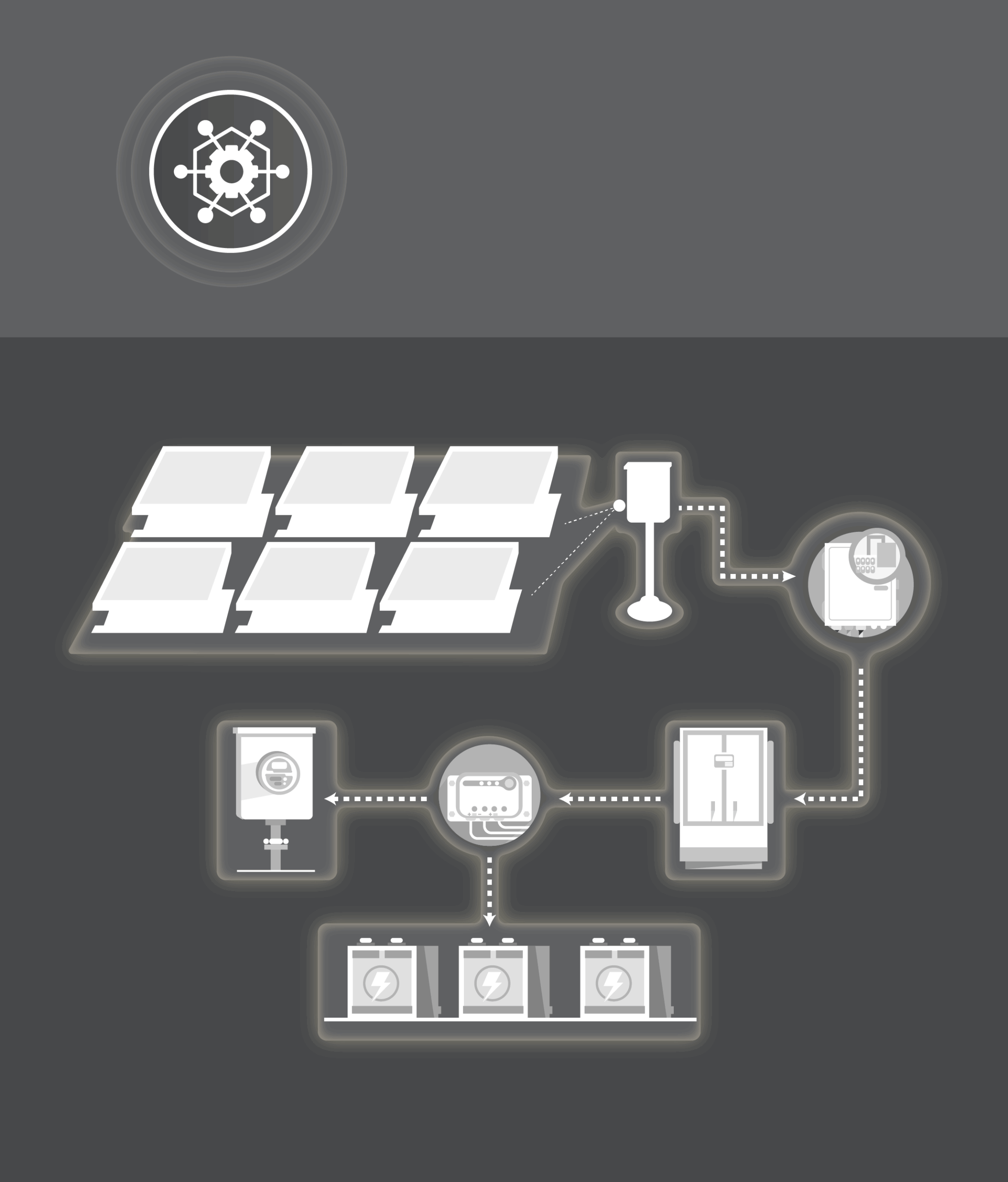
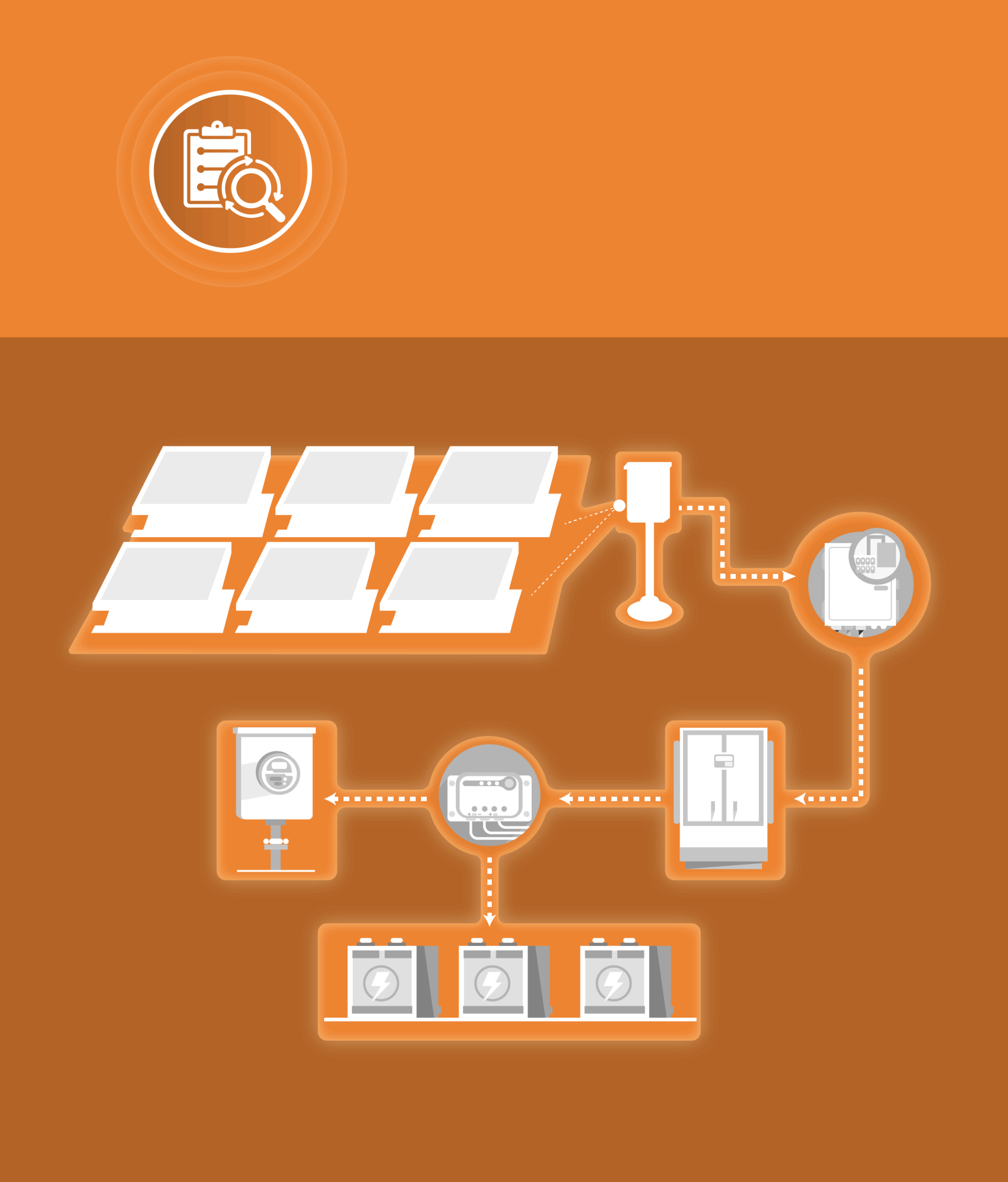
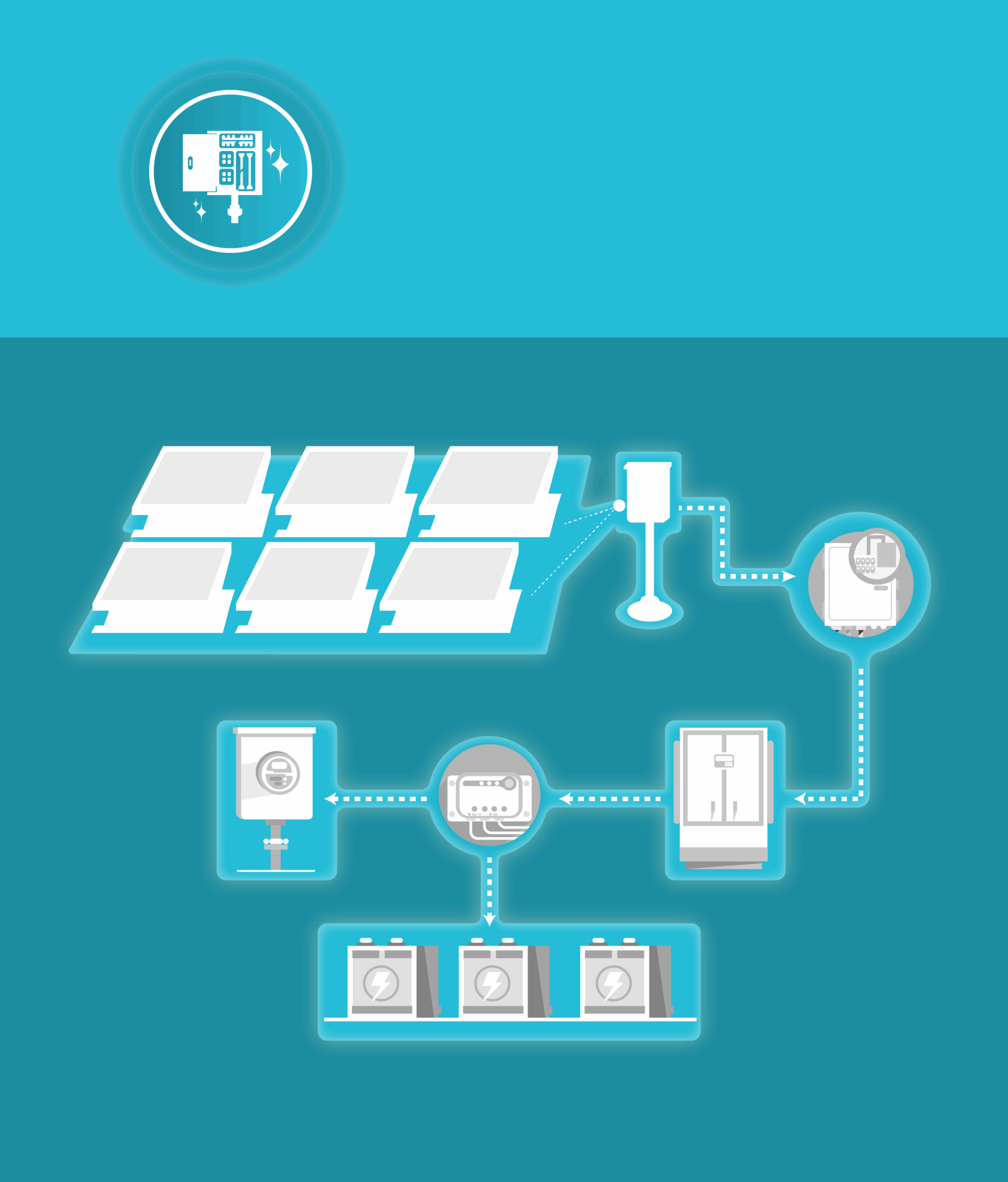
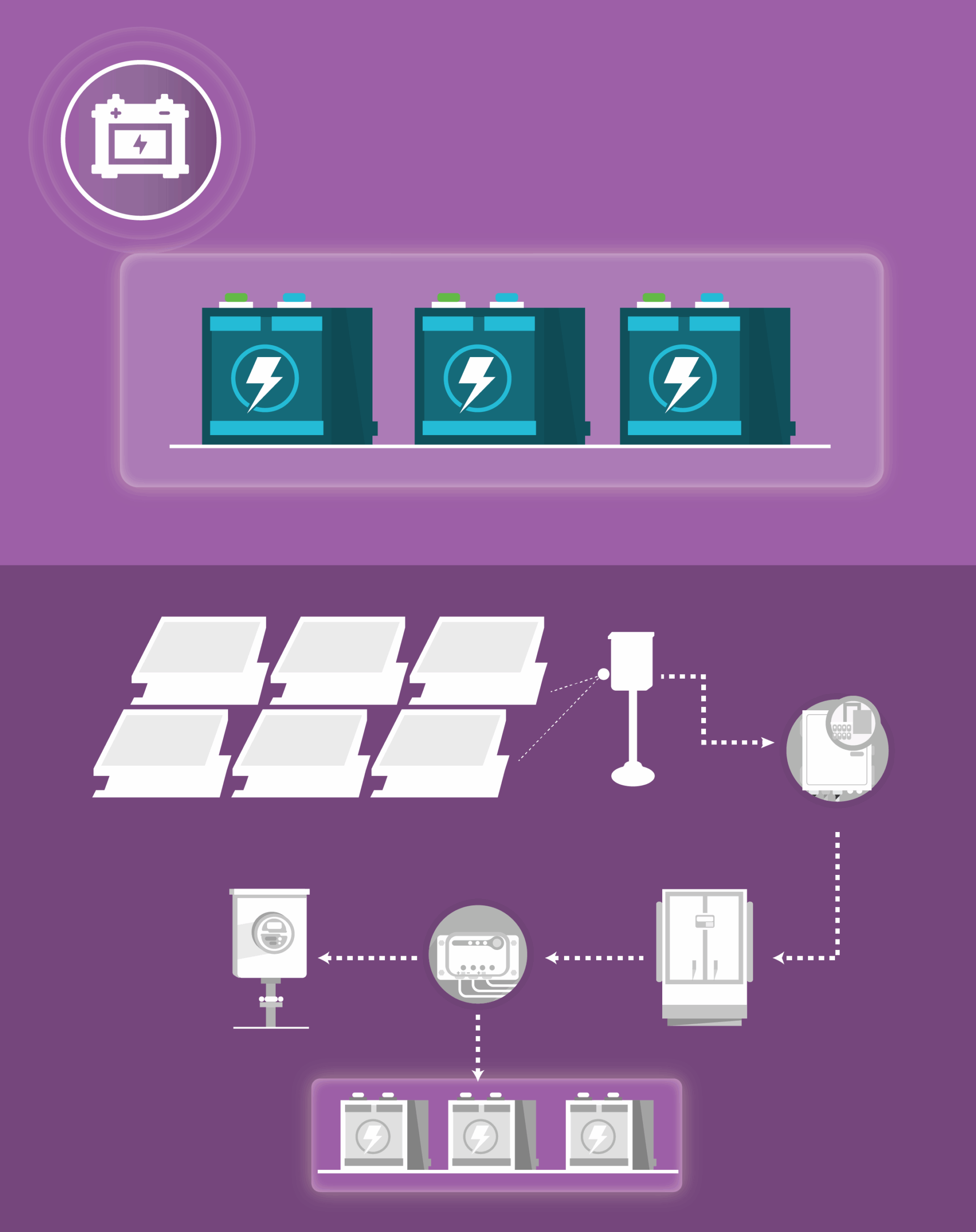
*AC-coupled energy storage system displayed, but the decisions between AC- or DC-coupled energy storage systems must be made during the design process to determine which setup best fits the asset’s needs.
Operating and maintaining a solar + storage asset requires a variety of activities that should be factored into O&M budgets and program design.
Below is a summary of typical solar + solar O&M activities as well as some key considerations.
*AC-coupled energy storage system displayed, but the decisions between AC- or DC-coupled energy storage systems must be made during the design process to determine which setup best fits the asset’s needs.
Typical O&M Activities
Panel Cleaning
Typical Solar + Storage O&M Activities
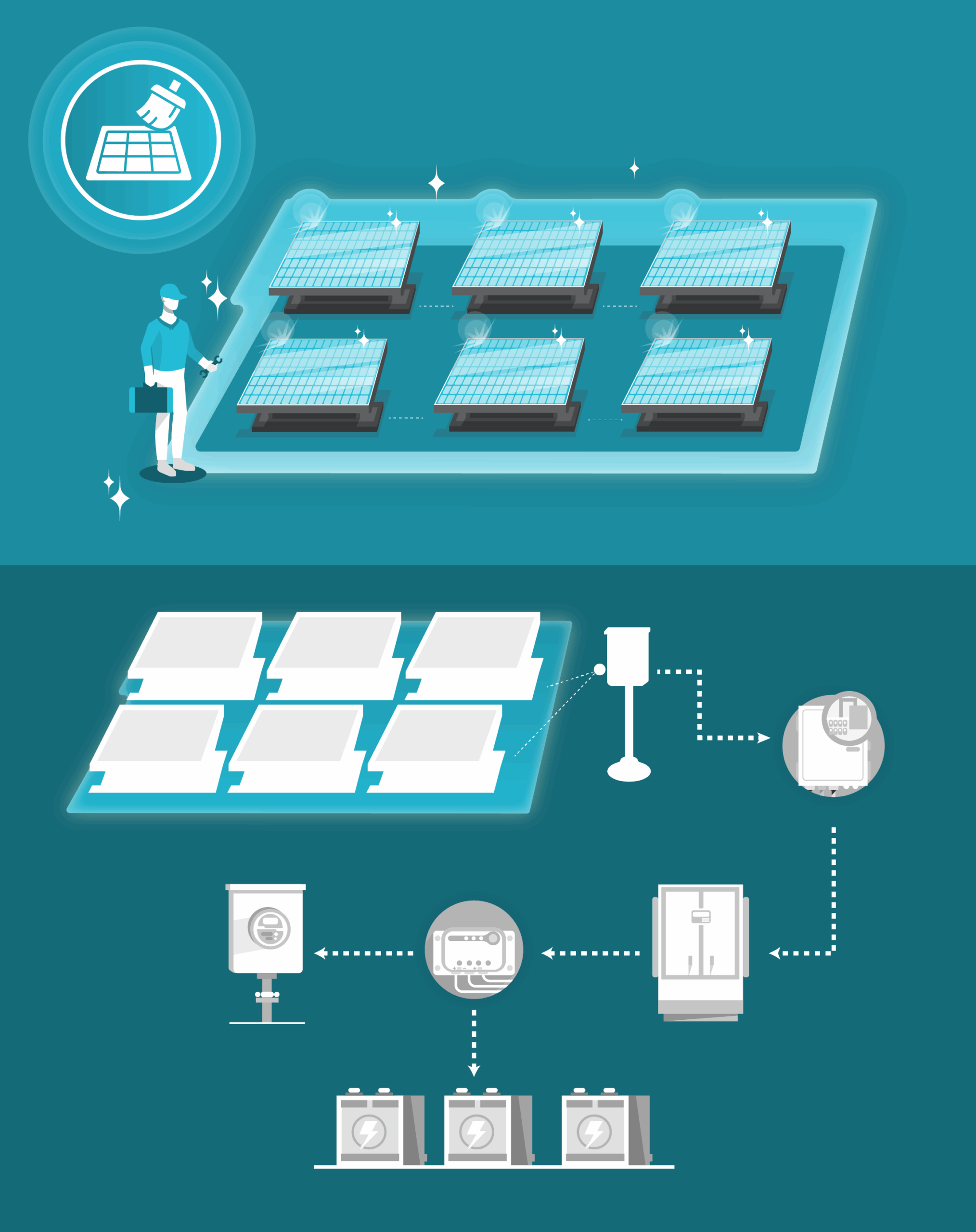
Soiling losses average 5% to 6% per year, depending on local conditions. The frequency of cleaning to reduce these losses is determined by the local environment and the value of solar. Key considerations include:
- Weather patterns such as the severity and frequency of dust, pollen, rain, salt air, and snow and ice
- Local capacity factor and value of the delivered power – the higher the local resource and the higher the price from power from the plant, generally the greater the payoff from cleaning
- Animal activity (large bird populations can greatly soil panels)
- Nearby agricultural/industrial activity may create dust or other debris which lowers panel energy production
TYPICAL O&M ACTIVITIES
TYPICAL O&M ACTIVITIES
Panel Cleaning
Typical Solar + Storage O&M Activities
Soiling losses average 5% to 6% per year, depending on local conditions. The frequency of cleaning to reduce these losses is determined by the local environment and the value of solar. Key considerations include:
- Weather patterns such as the severity and frequency of dust, pollen, rain, salt air, and snow and ice
- Local capacity factor and value of the delivered power– the higher the local resource and the higher the price from power from the plant, generally the greater the payoff from cleaning
- Animal activity (large bird populations can greatly soil panels)
- Nearby agricultural/industrial activity may create dust or other debris which lowers panel energy production
Panel Cleaning
Typical Solar + Storage O&M Activities
Soiling losses average 5% to 6% per year, depending on local conditions. The frequency of cleaning to reduce these losses is determined by the local environment and the value of solar. Key considerations include:
- Weather patterns such as the severity and frequency of dust, pollen, rain, salt air, and snow and ice
- Local capacity factor and value of the delivered power– the higher the local resource and the higher the price from power from the plant, generally the greater the payoff from cleaning
- Animal activity (large bird populations can greatly soil panels)
- Nearby agricultural/industrial activity may create dust or other debris which lowers panel energy production
Operations Monitoring
Typical Solar + Storage O&M Activities
Operations:
- Cost/benefit analysis on maintenance decisions
- Maintenance and inspections schedules
- Interactions with utilities on activities such as curtailment
- Power and energy forecasting
- System performance tracking and system adjustments
Monitoring:
- Key considerations include ensuring accurate energy metering to provide correct invoices, site security, and responding to system faults and error messages. The quality of the monitoring equipment, data presentation clarity, and transparency of measurement protocols and procedures all affect perceived system performance
- According to an NREL study, “the combined effects of system measurement and modeling errors can range from 5% to 10%”
- Monitoring is often complicated by how the system is operated. For example, modulating output or changing power factor can make it more difficult to draw accurate conclusions from monitored data
Source: NREL 2013, Analysis of Photovoltaic System Energy Performance Evaluation Method, https://www.nrel.gov/docs/fy14osti/60628.pdf
Operations Monitoring
Typical Solar + Storage O&M Activities
Operations
- Cost/benefit analysis on maintenance decisions
- Maintenance and inspections schedules
- Interactions with utilities on activities such as curtailment
- Power and energy forecasting
- System performance tracking and system adjustments
Monitoring
- Key considerations include ensuring accurate energy metering to provide correct invoices, site security, and responding to system faults and error messages. The quality of the monitoring equipment, data presentation clarity, and transparency of measurement protocols and procedures all affect perceived system performance
- According to an NREL study, “the combined effects of system measurement and modeling errors can range from 5% to 10%”
- Monitoring is often complicated by how the system is operated. For example, modulating output or changing power factor can make it more difficult to draw accurate conclusions from monitored data
Source: NREL 2013, Analysis of Photovoltaic System Energy Performance Evaluation Method, https://www.nrel.gov/docs/fy14osti/60628.pdf
Operations Monitoring
Typical Solar + Storage O&M Activities
Operations
- Cost/benefit analysis on maintenance decisions
- Maintenance and inspections schedules
- Interactions with utilities on activities such as curtailment
- Power and energy forecasting
- System performance tracking and system adjustments
Monitoring
- Key considerations include ensuring accurate energy metering to provide correct invoices, site security, and responding to system faults and error messages. The quality of the monitoring equipment, data presentation clarity, and transparency of measurement protocols and procedures all affect perceived system performance
- According to an NREL study, “the combined effects of system measurement and modeling errors can range from 5% to 10%”
- Monitoring is often complicated by how the system is operated. For example, modulating output or changing power factor can make it more difficult to draw accurate conclusions from monitored data
Source: NREL 2013, Analysis of Photovoltaic System Energy Performance Evaluation Method, https://www.nrel.gov/docs/fy14osti/60628.pdf
Inspections and Testing
Typical Solar + Storage O&M Activities
Visual, electrical, and performance inspections and testing are performed throughout the life of a solar + storage asset. Testing may include:
- Modules: For systems without string-level monitoring, (such as plants using central inverters) checking connections between modules
- Junction or string combiner boxes: Checking for loose connections and elements intrusion which can decrease system performance. Use of thermal imaging can help spot weak or loose connections and can also detect hotspots within inverters and on modules
- Racking assemblies: Checking structural integrity of racking and cable conduits
- Trackers: Preventive maintenance to address normal wear and tear on motors, actuators, gearboxes, and cables
- Balance of System (BOS): Communications, monitoring and security systems, and auxiliary power
Inspections and Testing
Typical Solar + Storage O&M Activities
Visual, electrical, and performance inspections and testing are performed throughout the life of a solar + storage asset. Testing may include:
- Modules: For systems without string-level monitoring, (such as plants using central inverters) checking connections between modules
- Junction or string combiner boxes: Checking for loose connections and elements intrusion which can decrease system performance. Use of thermal imaging can help spot weak or loose connections and can also detect hotspots within inverters and on modules
- Racking assemblies: Checking structural integrity of racking and cable conduits
- Trackers: Preventive maintenance to address normal wear and tear on motors, actuators, gearboxes, and cables
- Balance of System (BOS): Communications, monitoring and security systems, and auxiliary power
Inspections and Testing
Typical Solar + Storage O&M Activities
Visual, electrical, and performance inspections and testing are performed throughout the life of a solar + storage asset. Testing may include:
- Modules: For systems without string-level monitoring, (such as plants using central inverters) checking connections between modules
- Junction or string combiner boxes: Checking for loose connections and elements intrusion which can decrease system performance. Use of thermal imaging can help spot weak or loose connections and can also detect hotspots within inverters and on modules
- Racking assemblies: Checking structural integrity of racking and cable conduits
- Trackers: Preventive maintenance to address normal wear and tear on motors, actuators, gearboxes, and cables
- Balance of System (BOS): Communications, monitoring and security systems, and auxiliary power
Vegetation Management
Typical Solar + Storage O&M Activities
When evaluating vegetation management, consider the following:
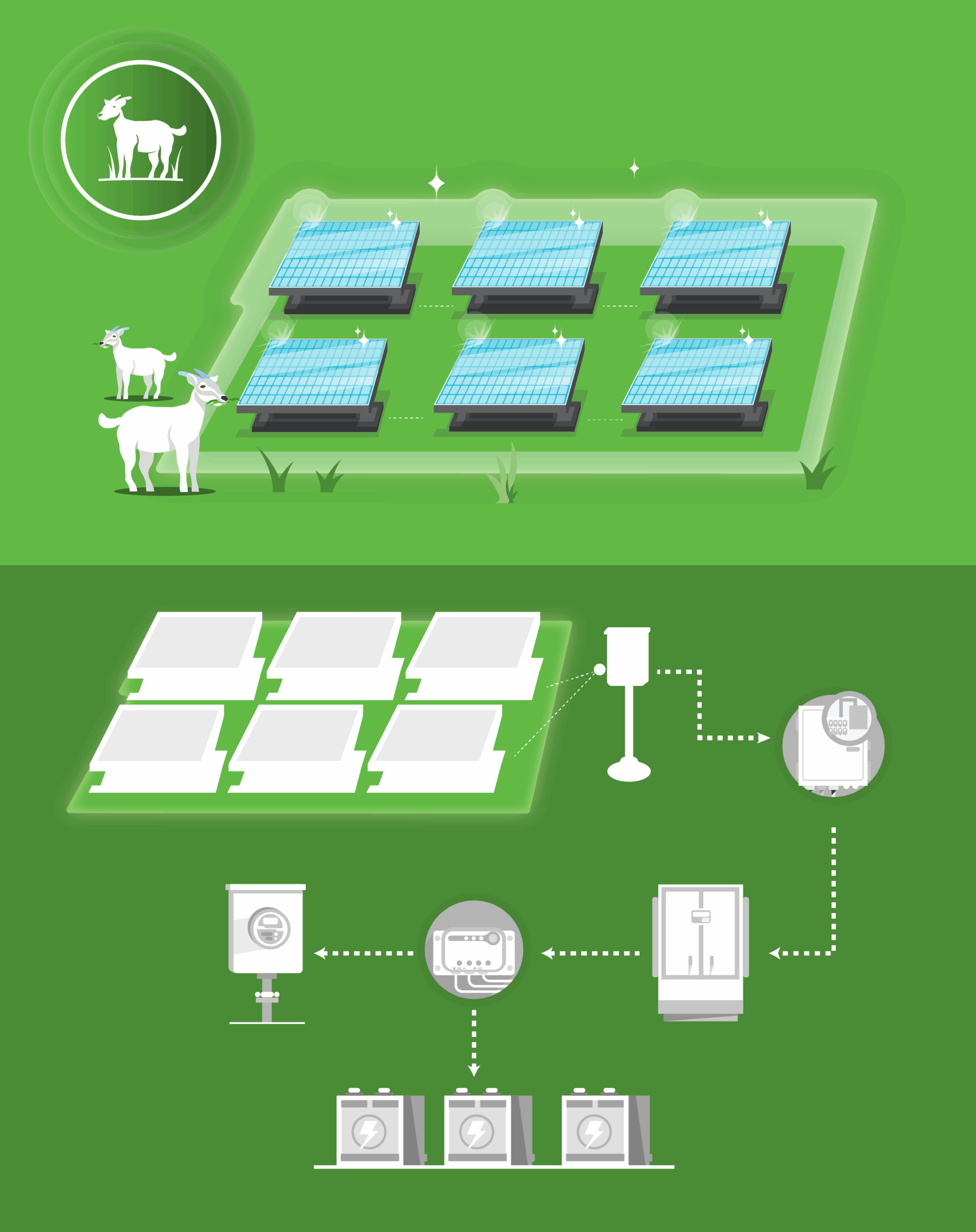
- Regular groundskeeping: Groundskeeping, such as mowing, is needed to prevent grass and weeds from shading panels and impacting other system components
- Innovative groundskeeping: While labor is often expensive and/or unreliable to perform these tasks, solutions such as robotic mowing and animal grazing (e.g., goats) have emerged as viable, relatively low-cost solutions
Vegetation Management
Typical Solar + Storage O&M Activities
When evaluating vegetation management, consider the following:
- Regular groundskeeping: Groundskeeping, such as mowing, is needed to prevent grass and weeds from shading panels and impacting other system components
- Innovative groundskeeping: While labor is often expensive and/or unreliable to perform these tasks, solutions such as robotic mowing and animal grazing (e.g., goats) have emerged as viable, relatively low-cost solutions
Vegetation Management
Typical Solar + Storage O&M Activities
When evaluating vegetation management, consider the following:
- Regular groundskeeping: Groundskeeping, such as mowing, is needed to prevent grass and weeds from shading panels and impacting other system components
- Innovative groundskeeping: While labor is often expensive and/or unreliable to perform these tasks, solutions such as robotic mowing and animal grazing (e.g., goats) have emerged as viable, relatively low-cost solutions
Component Replacement
Typical Solar + Storage O&M Activities
- Proactive maintenance: Regular, proactive maintenance is essential for optimizing system performance and preventing costly failures
- Inverter maintenance: Inverters are the most maintenance-intensive components and a common cause of system outages or reduced performance
- Advances in inverter technology have improved reliability, with longer warranties now available, reducing long-term risk
- Central vs. string inverters: The choice between central and string inverters involves trade-offs in capital and O&M costs, impacting maintenance strategies and overall system efficiency
Component Replacement
Typical Solar + Storage O&M Activities
- Proactive maintenance: Regular, proactive maintenance is essential for optimizing system performance and preventing costly failures
- Inverter maintenance: Inverters are the most maintenance-intensive components and a common cause of system outages or reduced performance
- Advances in inverter technology have improved reliability, with longer warranties now available, reducing long-term risk
- Central vs. string inverters: The choice between central and string inverters involves trade-offs in capital and O&M costs, impacting maintenance strategies and overall system efficiency
Component Replacement
Typical Solar + Storage O&M Activities
- Proactive maintenance: Regular, proactive maintenance is essential for optimizing system performance and preventing costly failures
- Inverter maintenance: Inverters are the most maintenance-intensive components and a common cause of system outages or reduced performance
- Advances in inverter technology have improved reliability, with longer warranties now available, reducing long-term risk
- Central vs. string inverters: The choice between central and string inverters involves trade-offs in capital and O&M costs, impacting maintenance strategies and overall system efficiency
Non-Equipment Considerations
Typical Solar + Storage O&M Activities
Administration
Key considerations include:
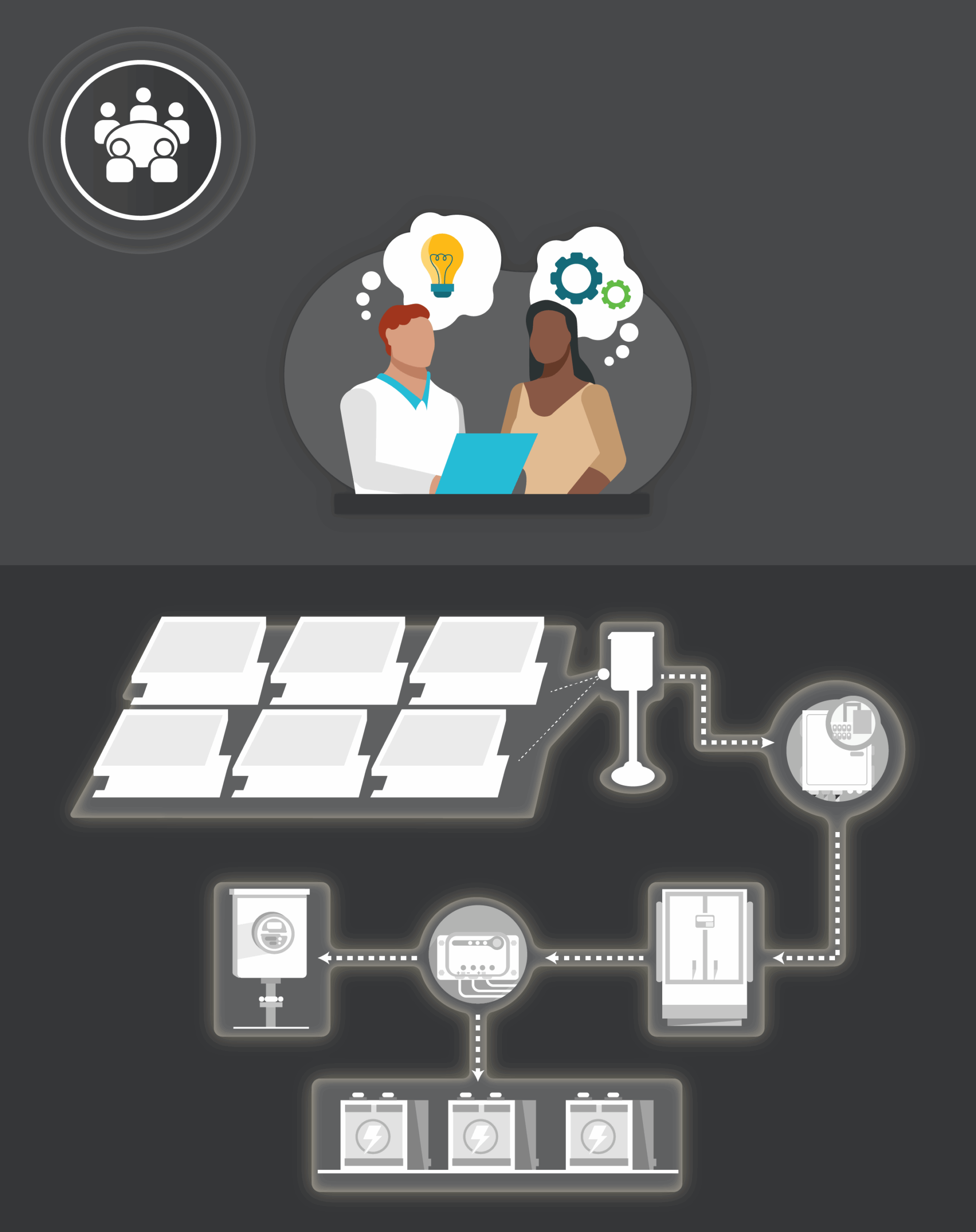
- Budgeting for preventative maintenance and major corrective maintenance
- Equipment inventories, operating manuals, and warranty documentation
- Selection and supervision of subcontractors
- Accounting and financing activities
- Recordkeeping
- Regulatory compliance activities
- Asset management and security
- Property taxes and land lease costs
- Emergency operations planning
Tax Credits: Tax credits significantly impact project cost and financing. Increased credits for meeting prevailing wage require annual commitment and documentation.
Insurance: Insurance may not be included in the O&M contract, but system owners should carry insurance to cover risks like fire, hail damage, vandalism, and severe storms. In addition to conventional insurance instruments, there are several emerging insurance offerings:
- O&M cost cap: For a premium, a customer can ensure that their O&M out-of-pocket costs do not exceed a pre-determined amount
- Energy production insurance (aka a solar revenue put): Covers failure to achieve a specific level of energy output. This decreases cash flow risk and exposure to liquidated damages
Non-Equipment Considerations
Typical Solar + Storage O&M Activities
Administration
Key considerations include:
- Budgeting for preventative maintenance and major corrective maintenance
- Equipment inventories, operating manuals, and warranty documentation
- Selection and supervision of subcontractors
- Accounting and financing activities
- Record keeping
- Regulatory compliance activities
- Asset management and security
- Property taxes and land lease costs
- Emergency operations planning
Tax Credits: Tax credits significantly impact project cost and financing. Increased credits for meeting prevailing wage require annual commitment and documentation
Insurance: Insurance may not be included in the O&M contract, but system owners should carry insurance to cover risks like fire, hail damage, vandalism, and severe storms. In addition to conventional insurance instruments, there are several emerging insurance offerings:
- O&M cost cap: For a premium, a customer can ensure that their O&M out of pocket costs do not exceed a pre-determined amount
- Energy production insurance (aka a “Solar Revenue Put”): Covers failure to achieve a specific level of energy output. This decreases cash flow risk and exposure to liquidated damages
Non-Equipment Considerations
Typical Solar + Storage O&M Activities
Administration
Key considerations include:
- Budgeting for preventative maintenance and major corrective maintenance
- Equipment inventories, operating manuals, and warranty documentation
- Selection and supervision of subcontractors
- Accounting and financing activities
- Record keeping
- Regulatory compliance activities
- Asset management and security
- Property taxes and land lease costs
- Emergency operations planning
Tax Credits: Tax credits significantly impact project cost and financing. Increased credits for meeting prevailing wage require annual commitment and documentation
Insurance: Insurance may not be included in the O&M contract, but system owners should carry insurance to cover risks like fire, hail damage, vandalism, and severe storms. In addition to conventional insurance instruments, there are several emerging insurance offerings:
- O&M cost cap: For a premium, a customer can ensure that their O&M out of pocket costs do not exceed a pre-determined amount
- Energy production insurance (aka a “Solar Revenue Put”): Covers failure to achieve a specific level of energy output. This decreases cash flow risk and exposure to liquidated damages
Battery Storage
Typical Solar + Storage O&M Activities
Storage allows for capture of excess energy and distribution during off-peak times and is increasingly common in modern solar assets. Key considerations for solar + storage include the following:
- Type of battery: Lithium-ion, Lead Acid, Sodium-ion, among others. Each type requires different O&M
- The design of the battery in a solar + storage system, which should be driven by its intended application
- Use case, which includes frequency regulation, time-of-use arbitrage, ramp-rate controls, peak shaving, resiliency, and micro-grid operation
- Battery replacement needs, which are determined by how it is operated, including the magnitude of charge/discharge, length of time spent in low-charge states, and battery temperature
Battery Storage
Typical Solar + Storage O&M Activities
Storage allows for capture of excess energy and distribution during off-peak times and is increasingly common in modern solar assets. Key considerations for solar + storage include the following:
- Type of battery: Lithium-ion, Lead Acid, Sodium-ion, among others. Each type requires different O&M
- The design of the battery in a solar + storage system, which should be driven by its intended application
- Use case, which includes frequency regulation, time-of-use arbitrage, ramp-rate controls, peak shaving, resiliency, and micro-grid operation
- Battery replacement needs, which are determined by how it is operated, including the magnitude of charge/discharge, length of time spent in low-charge states, and battery temperature
Battery Storage
Typical Solar + Storage O&M Activities
Storage allows for capture of excess energy and distribution during off-peak times and is increasingly common in modern solar assets. Key considerations for solar + storage include the following:
- Type of battery: Lithium-ion, Lead Acid, Sodium-ion, among others. Each type requires different O&M
- The design of the battery in a solar + storage system, which should be driven by its intended application
- Use case, which includes frequency regulation, time-of-use arbitrage, ramp-rate controls, peak shaving, resiliency, and micro-grid operation
- Battery replacement needs, which are determined by how it is operated, including the magnitude of charge/discharge, length of time spent in low-charge states, and battery temperature