

Show Filters

Top Results

Maximizing Efficiency Through Enterprise Cost Reduction

Article

Every day, executives in established industries grapple with a familiar set of challenges: spiraling costs, administrative inefficiencies, and unbalanced workloads. In an economy that is increasingly unpredictable, these issues become even more pronounced, threatening a company’s competitiveness and long-term viability. At its core, every dollar wasted represents a missed opportunity—a project that didn’t launch, a market left untapped, or a competitive edge lost. 

ScottMadden’s Enterprise Cost Reduction (ECR) goes beyond merely tightening the budget; it’s about realigning focus with strategic priorities and transforming enterprise goals into tangible actions. Companies that actively embrace ECR stand poised, agile, and ready for whatever the future holds. 

But how does ScottMadden approach ECR? Let’s delve deeper. 


Understanding Enterprise Cost Reduction

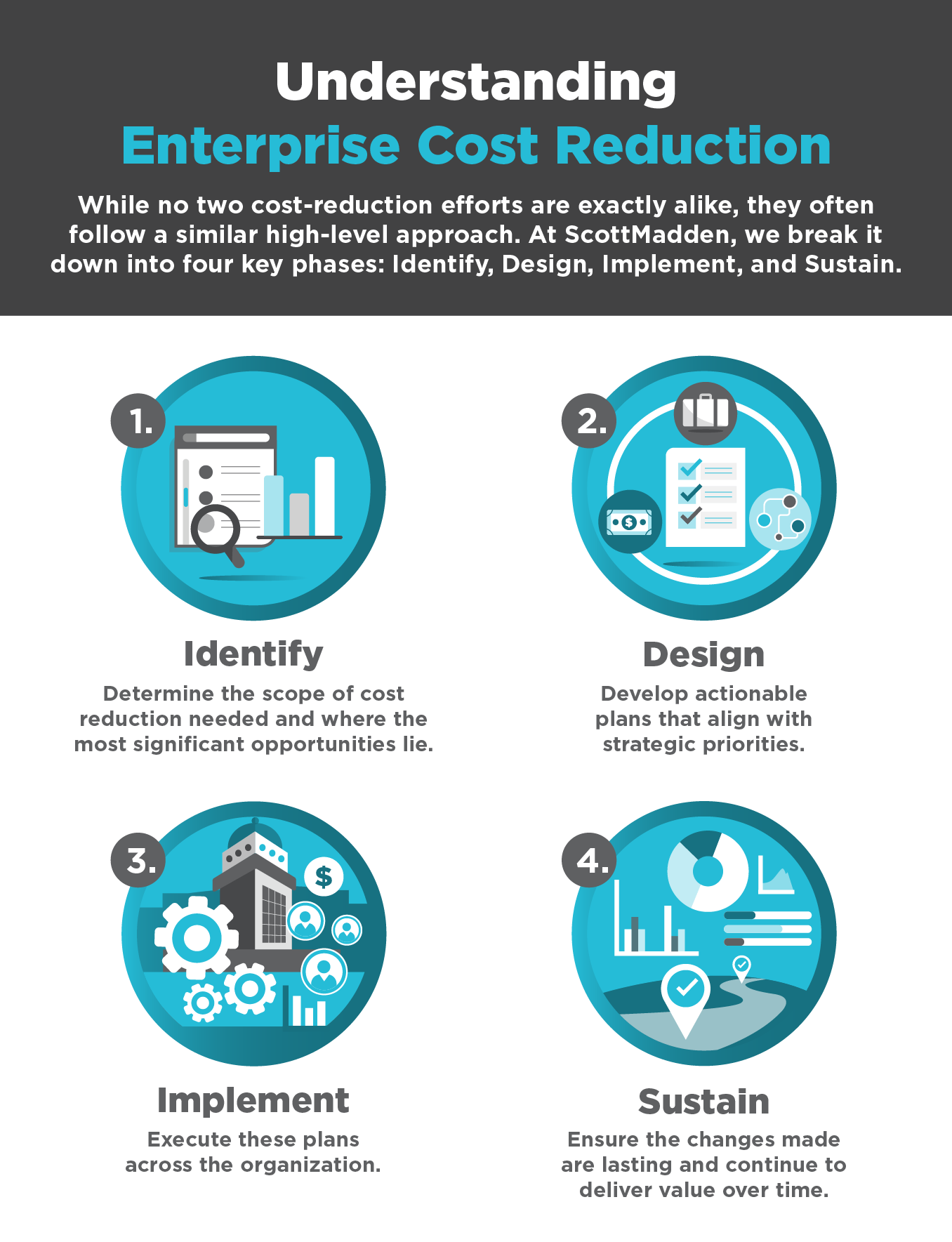
While no two cost-reduction efforts are exactly alike, they often follow a similar high-level approach. At ScottMadden, we break it down into four key phases: identify, design, implement, and sustain. 


Phase 1 – Identify: Setting the Foundation

The first step in any successful ECR initiative is the identify phase. How much do we need to reduce costs? What are our most significant savings opportunities? While it might seem straightforward to apply a blanket reduction—such as “10% from each department”—we believe a more strategic approach is crucial. Poorly designed targets lead to confusion and actions that are uncoordinated at best or conflicting at worst. 

Instead, establishing targets based on informed comparisons, whether internally or externally driven, is key. For example: 

  1. Functional Benchmarking: Compare your organization against industry leaders to identify process changes needed to align with best-in-class performers. 
  2. Performance Benchmarking: Set goals based on performance metrics that can be externally benchmarked. 
  3. Internal Divisional Benchmarking: Compare the financial performance of different departments or geographic regions within the organization. 


Understanding the gap between current and desired performance is essential for generating buy-in and driving communications throughout the process. But while benchmarking is helpful to inform decision-making, it is no substitute for executive-level strategic alignment. This can come about in various ways, and we’ve facilitated strategy sessions and interactive simulations, where leaders can work through realistic cost challenges. 

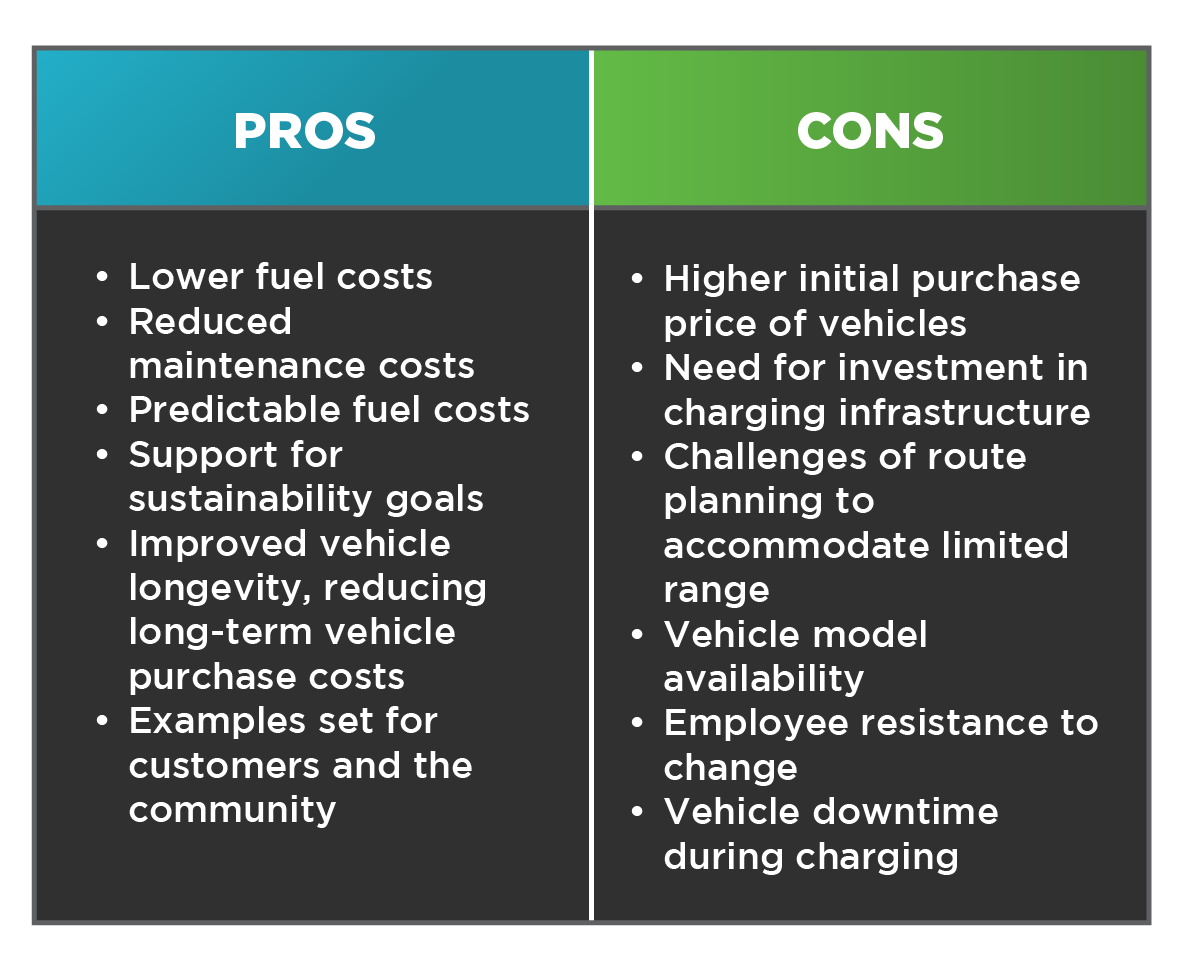
For example, take a decision to electrify a company’s fleet of vehicles. ScottMadden would facilitate strategic sessions with leadership to assess the pros and cons of the decision and simulate how the transition to electric vehicles could impact the company’s operations. Through this, the leaders can determine if the savings sufficiently outweigh the tangible and intangible costs of the decision. 


Whatever the approach, it’s vital to establish clear guiding principles, define what is in and out of scope, and identify the “third rail” or areas that should remain untouched. 

Exiting the identify phase, you should have a clear cost-reduction target, a memorable theme or method for communicating it to employees, and strong alignment and buy-in from senior leaders in the business. 


Phase 2 – Design: Developing the Roadmap

Once you’ve identified where you need to focus, the next step is the design phase—determining what the organization needs to do differently to achieve its cost-reduction targets. This phase is where the team broadens, and the hands-on work begins. It should rely on the targets established by the executives but should include managers to ensure operational input is incorporated. 

Workload activity assessments can be particularly effective in this phase. They involve comparing resources (FTEs, contractor, or otherwise) spent performing a specific task or generating an output. In comparing the results, companies can identify work fragmentation, redundant work, and ultimately opportunities for consolidation, automation, or other efficiency-improving initiatives. Insights are found in the details, and collaboration with key leaders is crucial. However, it’s essential that brainstorming sessions don’t replace strategic thinking—another reason for having a clear strategy exiting the identify phase. 

Regardless of approach, cost-reduction initiatives need to be specific and actionable. We use a detailed template customized for each client’s project that includes assigned owners, key milestones, activities, risks, and offramps. These initiatives should be sustainable and robust enough to survive leadership changes. There is also a key distinction here—the lifespan of the cost-reduction initiative. Certain initiatives may only result in savings over a short timeframe whereas others could eliminate costs indefinitely. Precisely and consistently measuring the cost savings will help leaders more accurately compare solutions and select the highest-value options. 


Phase 3 – Implement and Sustain: Making Initiatives Stick

The implement phase is only as effective as the ability to execute the improvements that have been designed. If the design phase has been appropriately completed, you should have specific, actionable initiatives ready to launch. However, launching is just the beginning. Ensuring follow-through on actions and results is crucial, as implementation can often take months or even years. 

To sustain the change, it’s vital that initiatives don’t get discarded or revisited with each change in leadership. This is often where cost-reduction initiatives get reshuffled, deprioritized, or lost altogether. A change in a cost initiative means the strategy established in phase one is no longer being pursued in the same way. Having strong governance that requires changes in cost initiatives to clear certain thresholds, e.g., defining impacts to strategy, can limit unnecessary changes and maintain momentum over the initiative’s lifespan. When making changes, leaders must ask themselves why and defend their position against the strategy in place. 


Questions to answer when changing a cost-reduction initiative: 

  • Does this proposed change still align with the original goals of the cost-reduction initiative? How does it impact our long-term strategy compared to the current plan? 
  • What has changed in the internal or external environment that justifies revisiting this initiative? Do we have data to support this? 
  • What are the additional costs (financial, operational, or reputational) of making this change? Are we prepared to address any negative perceptions or resistance? 
  • If we redirect resources, what other opportunities may be impacted? 

Establishing a project management office staffed with top performers can help maintain continuity and ensure the right questions are being asked when these changes are made. Additionally, integrating management tools like key performance indicators, escalation processes, meeting cadences, and structured reporting can ensure that initiatives continue to advance over time. Addressing the pain points first, where possible, and celebrating wins along the way also helps build and sustain momentum while keeping teams motivated. 


Conclusion: A Strategic Approach to Enterprise Cost Reduction

ECR is about balancing a macro and micro perspective. Understanding the big picture—the benefits of a strategy, the risks being mitigated, and the market opportunities—is crucial. However, the small details must be understood and addressed to actually implement change. By digging into these details, questioning their relevance, and understanding them from the perspective of those directly impacted, you can uncover opportunities that bring you closer to your goals. 

When executed with diligence and conviction, consistent improvements can lead to dramatic results. Strong execution also fosters a culture of accountability and inspires individuals to contribute to the organization’s success. If done right, ECR can enhance the company culture—a transformation we’ve witnessed firsthand and one we’re eager to help more teams achieve. 


Ready to Get Started?

If you’re looking to drive meaningful cost reduction in your organization, reach out to us today. Let’s start the conversation and explore how we can help you navigate this transformative journey. 

Let’s Work Together

We don’t solve problems with canned methodologies; we help you solve the right problem in the right way. Our experience ensures that the solution works for you.

Related Insights